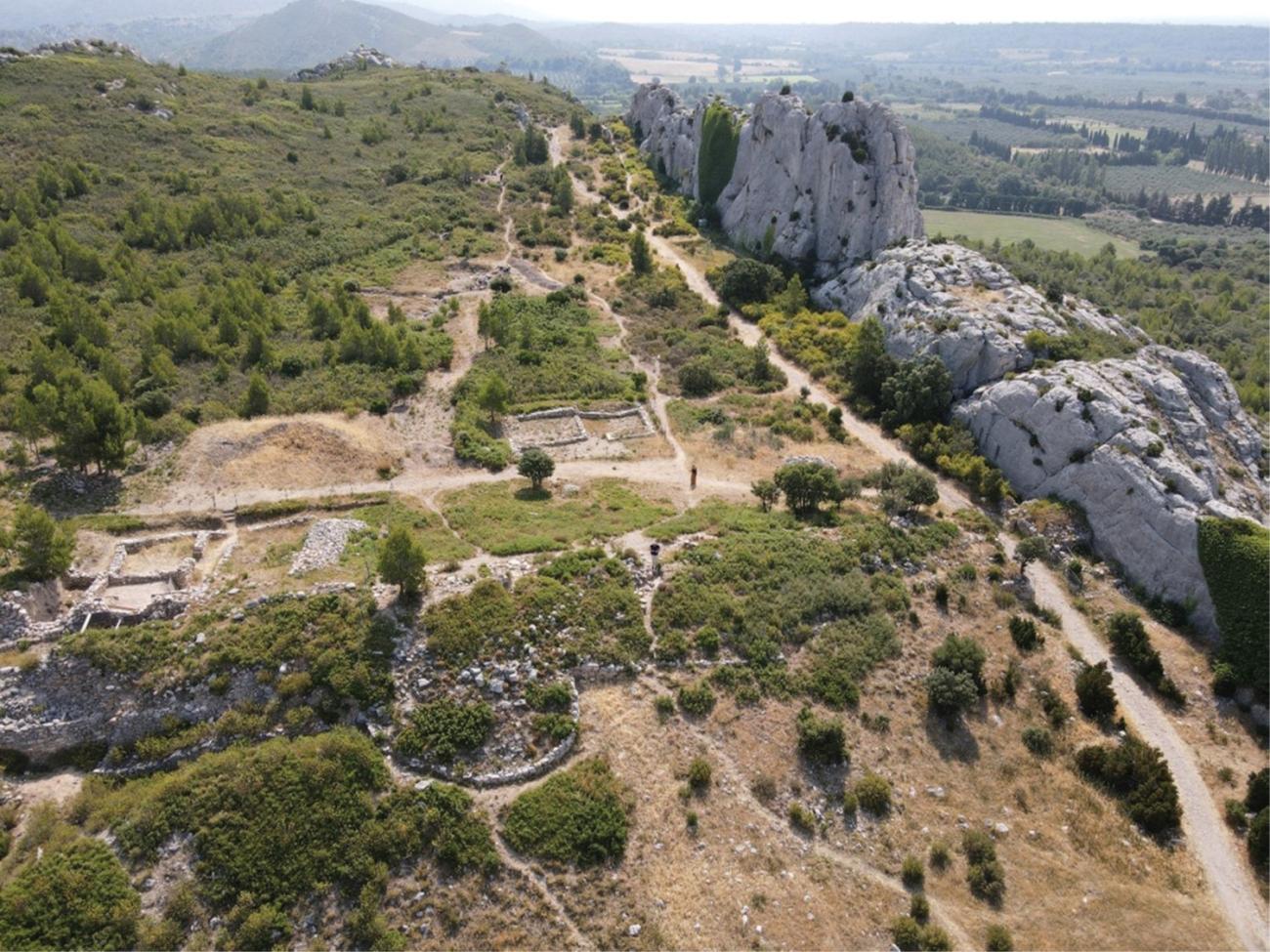
The Caisses de Jean-Jean oppidum in Mouriès (Bouches-du-Rhône) is a unique fortified settlement. Protected by two rock bars, the early protohistoric rampart has fossilized, in an unusual stratigraphic trap, phases of settlement from the 5th century BC to Late Antiquity, which are the focus of our research.
The archeological site of the Caisses de Jean-Jean oppidum lies at the heart of a vast, remarkable natural area in the Alpilles Regional Nature Park, north of the town of Mouriès in the Bouches-du-Rhône region. The natural defenses - two vertical, almost parallel rock bars - made it easy to fortify the settlement, which has been occupied since at least the Final Bronze Age and abandoned in the Late Roman period. Its main extension phase also occupied the southern slope known as the Petites Caisses for the last two centuries BC. The first documented excavations were carried out by Fernand Benoît in 1933. From 1978 onwards, Yves Marcadal resumed research on the site, accompanied by Patrice Arcelin from 1980 to 1982. Together, they discovered several rooms with stone walls from a group of dwellings dating from the 1st century BC. Yves Marcadal's subsequent work led to the discovery of a large meeting room dating from the late 2nd century BC, between 1981 and 1989. In 1998, a test pit was dug in the dwellings excavated by Fernand Benoit, uncovering numerous elements of a backfill dating from a fire between 125 and 75 BC. From 2001 to 2016, Yves Marcadal is accompanied by Jean-Louis Paillet (IRAA). In particular, they are studying the layout of the rampart from its earliest construction phases, as well as the site's external defences. They will then discover the first layouts at the heart of the Augustan-period multi-room house, and analyze the presence of these Greco-Italian architectural elements on the site, in particular their reuse in new constructions during the 1st century BC.
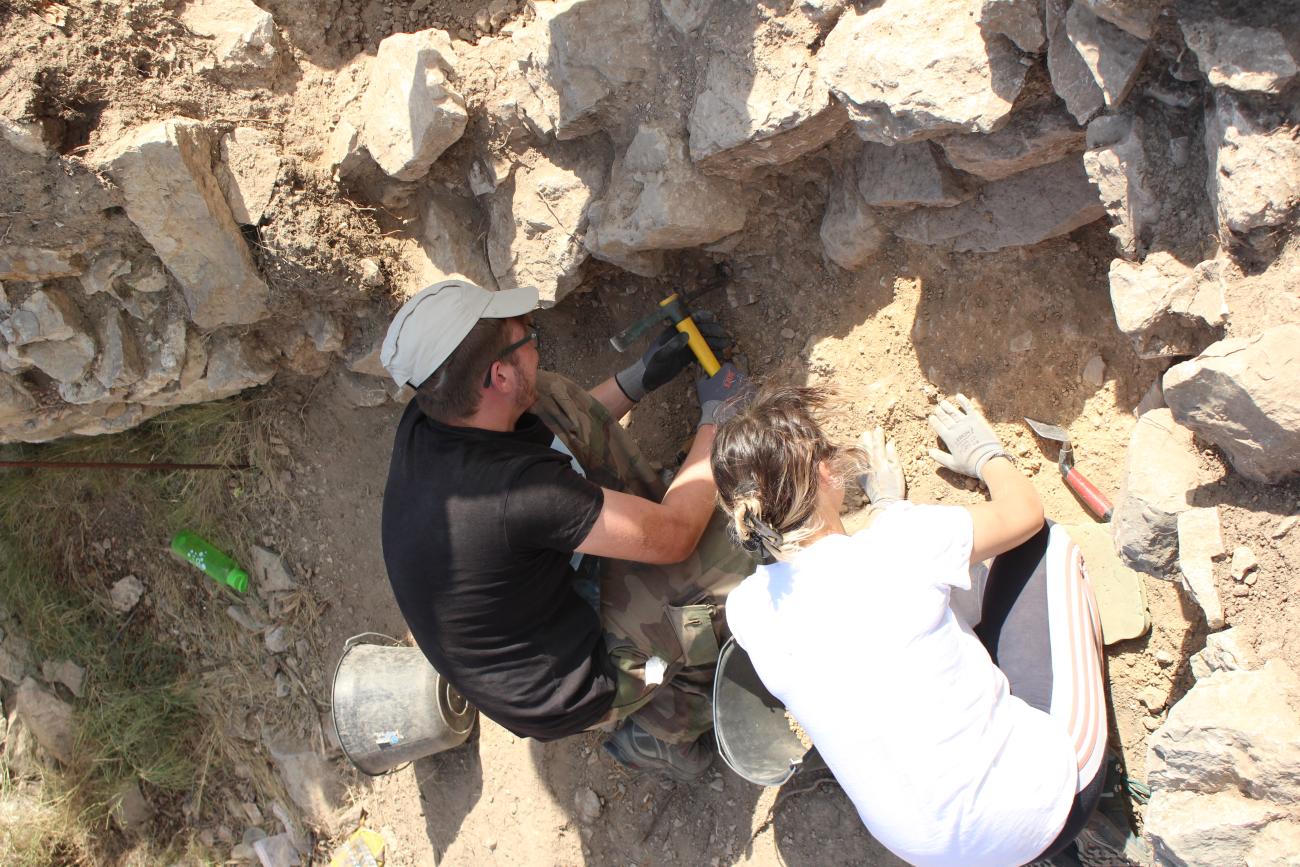
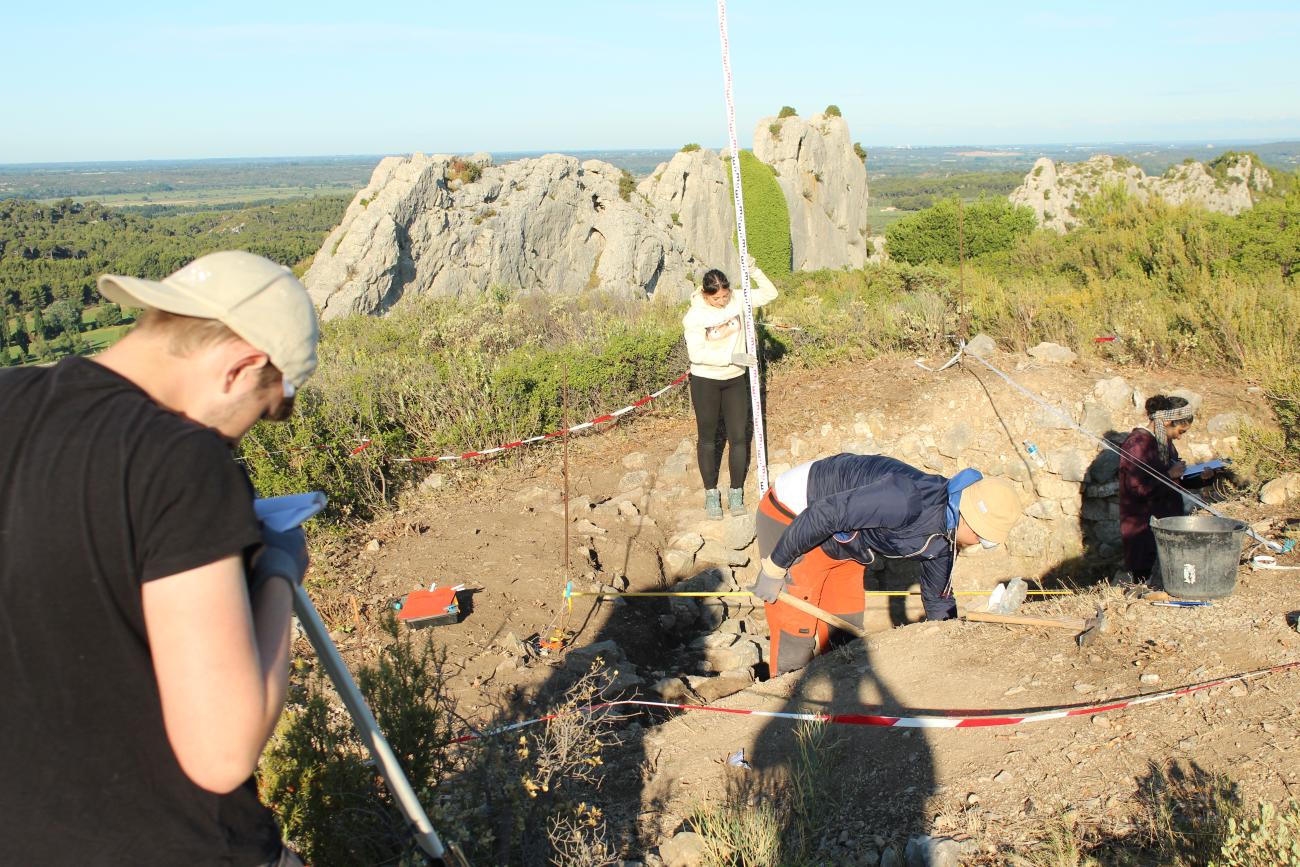
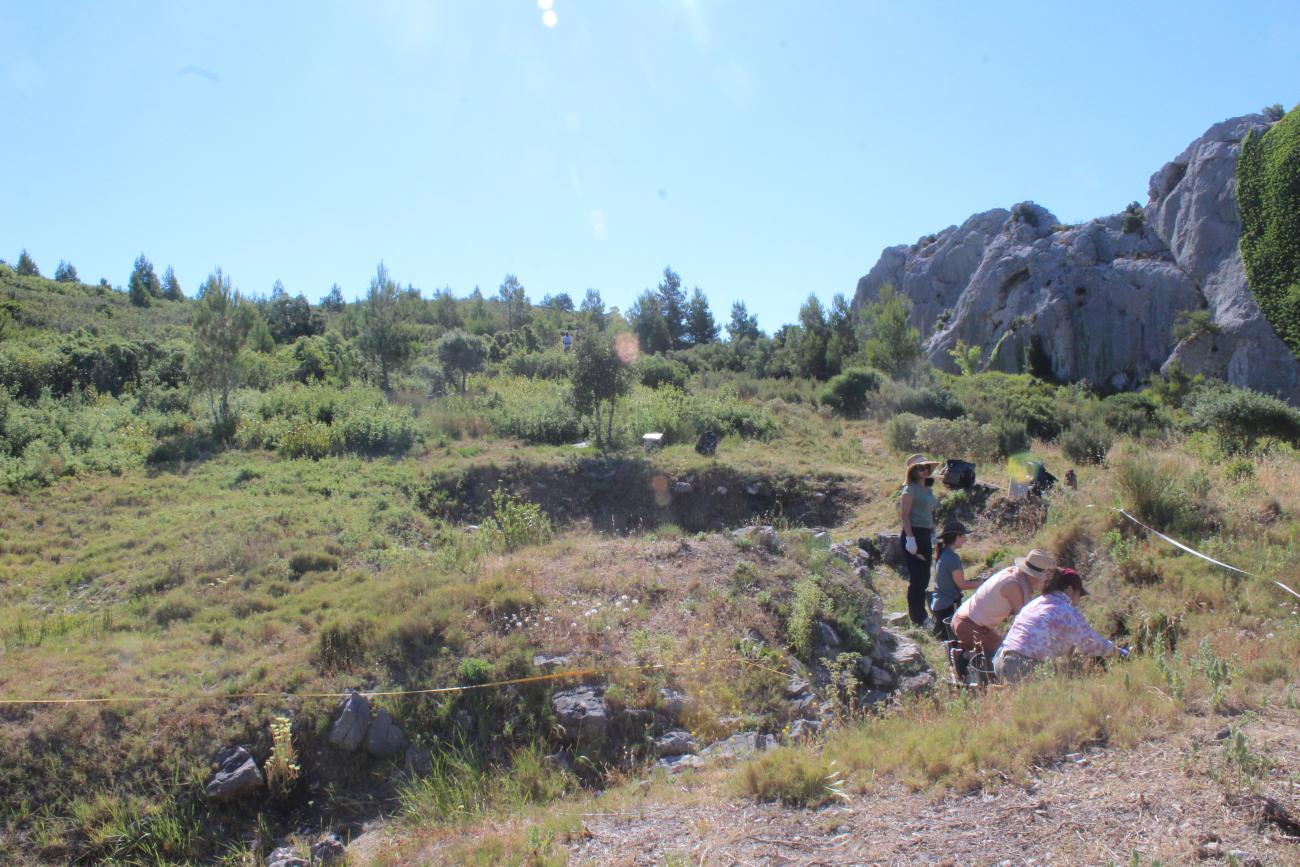
Since 2021, fieldwork has resumed under the direction of Loup Bernard, in order to better characterize the settlement levels that were only slightly impacted by the earlier excavations, and to attempt to exploit the extensive archives and furniture from the earlier digs.
Further information
43.7113599, 4.880024
Scientific managers
- Loup Bernard (Université de Strasbourg - Archimède): operational responsibility
- Laëtitia Cavassa and Delphine Isorardi (CNRS - CCJ): study of ceramics
- Stéphanie Delaguette (CNRS - IRAA): scientific archives
- Groupe archéologique de Mouriès: site maintenance and development
Institute laboratories involved
- Center Camille Jullian (CCJ)
- Institute for Research on Ancient Architecture (IRAA)
Partner teams and institutions
- University of Strasbourg - Archimède Laboratory
- Mouriès Archaeological Group (GAM)