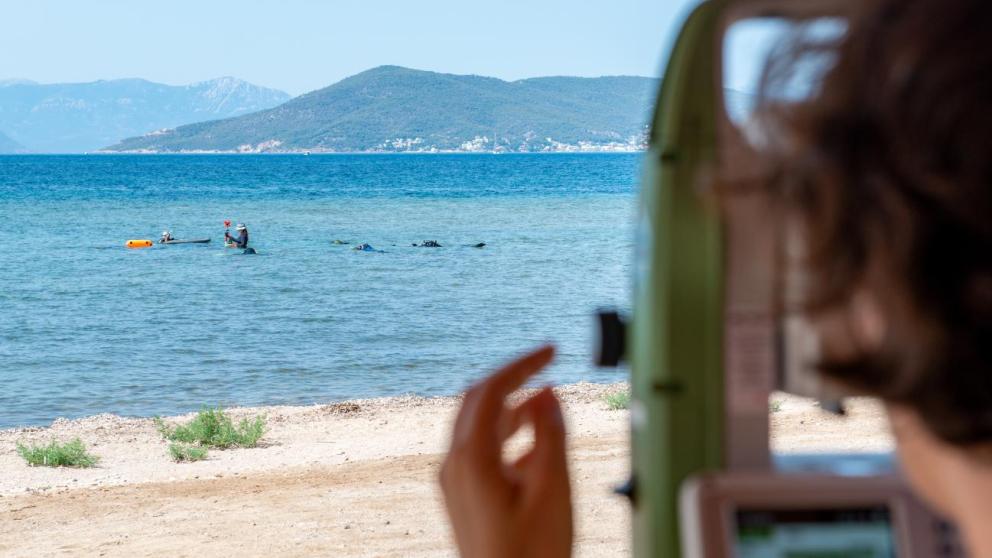
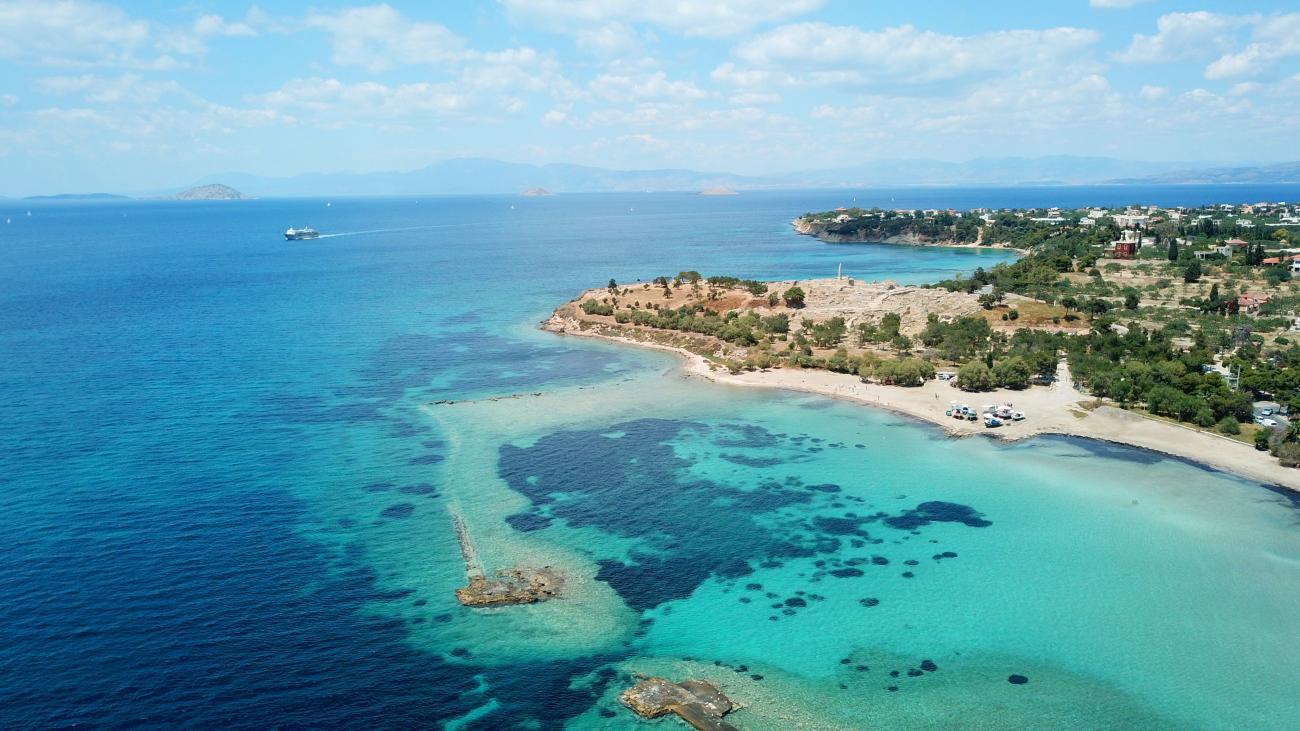
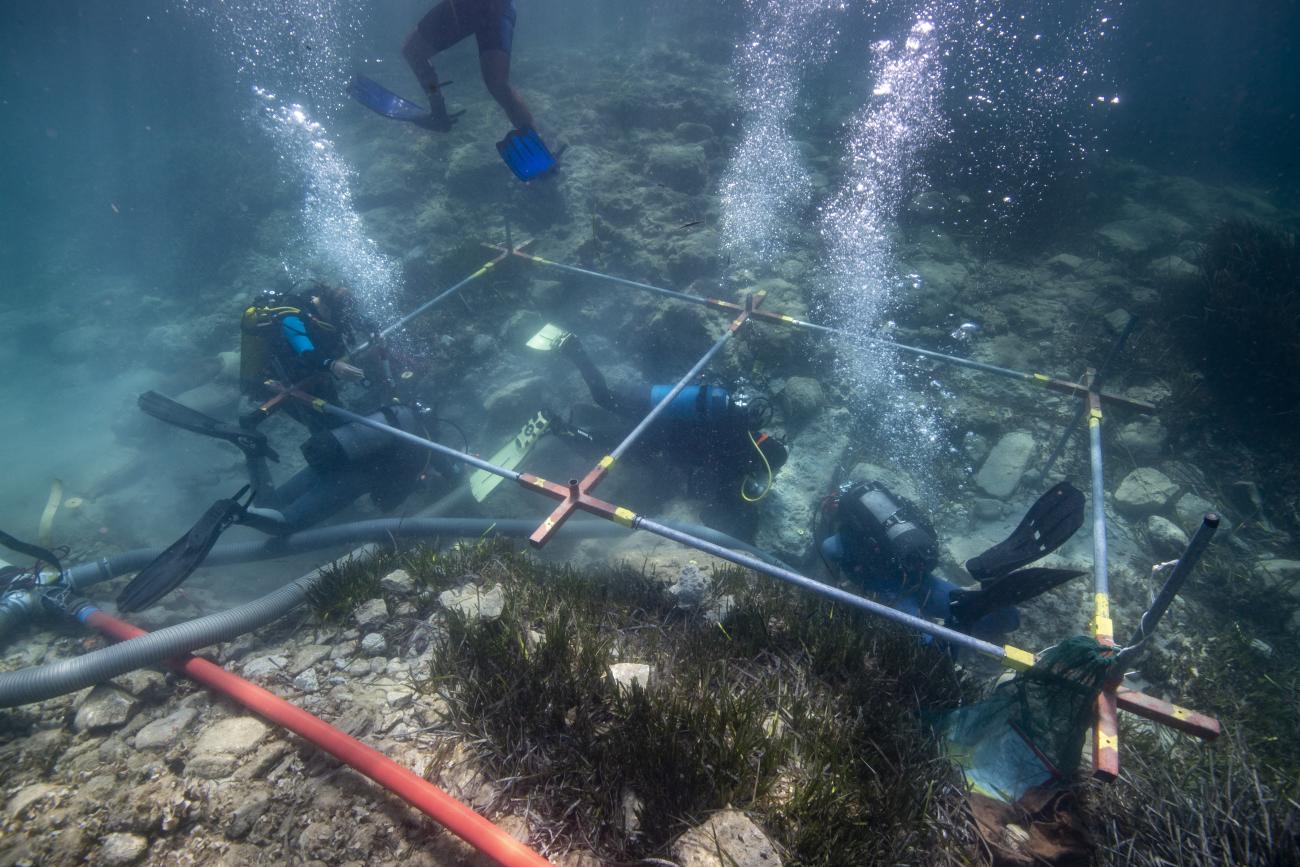
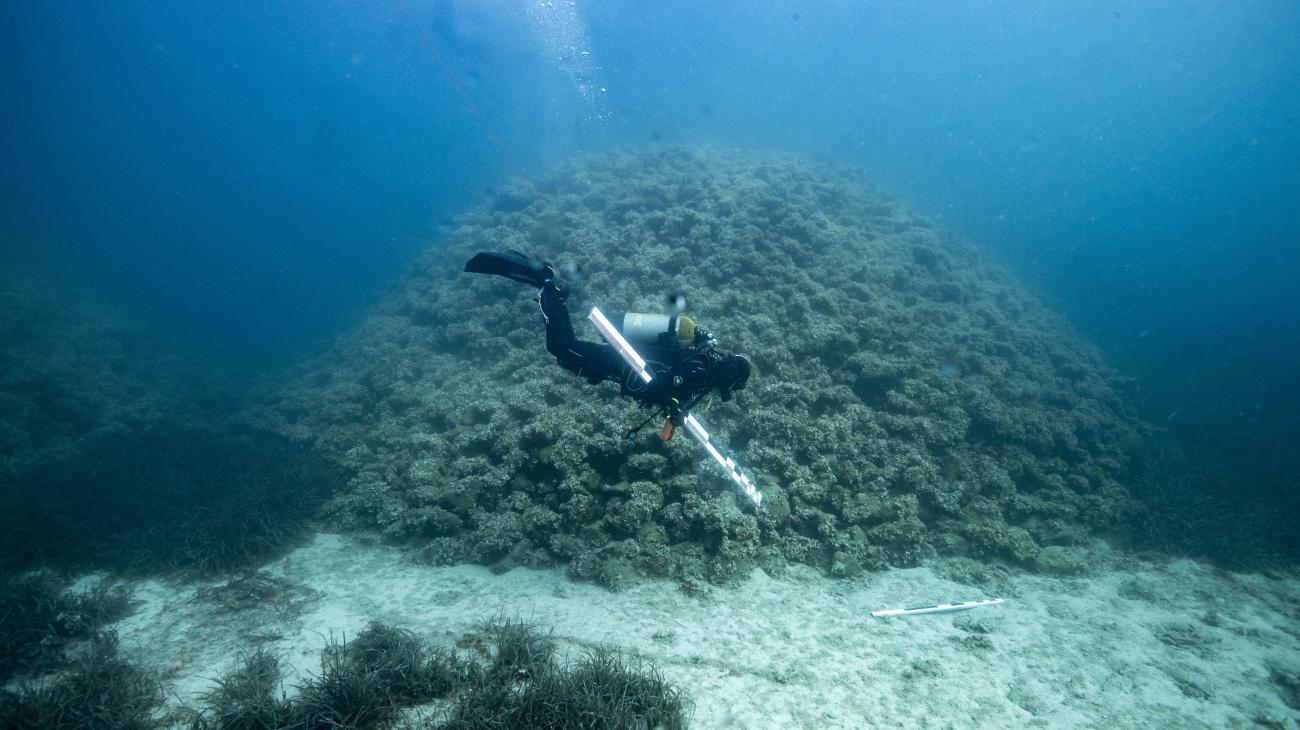
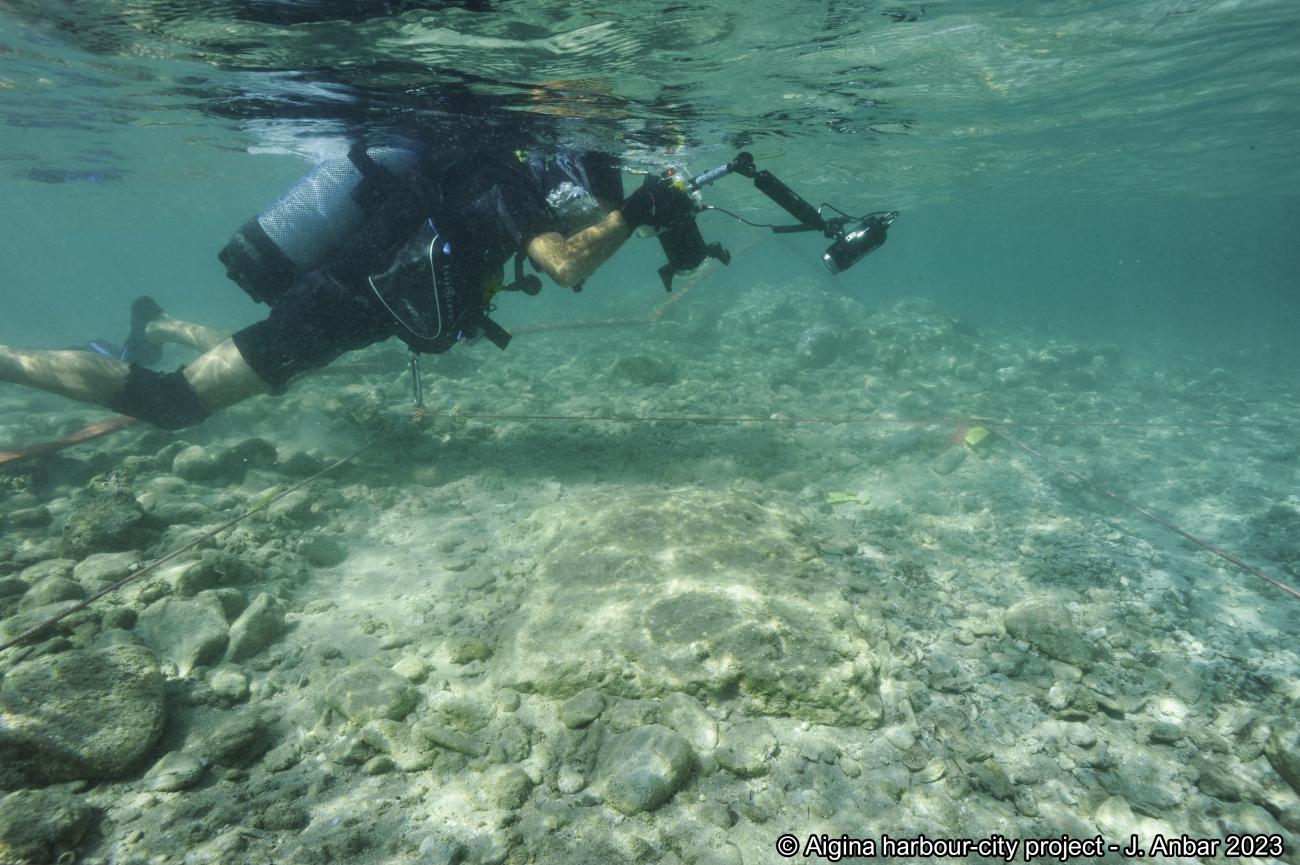
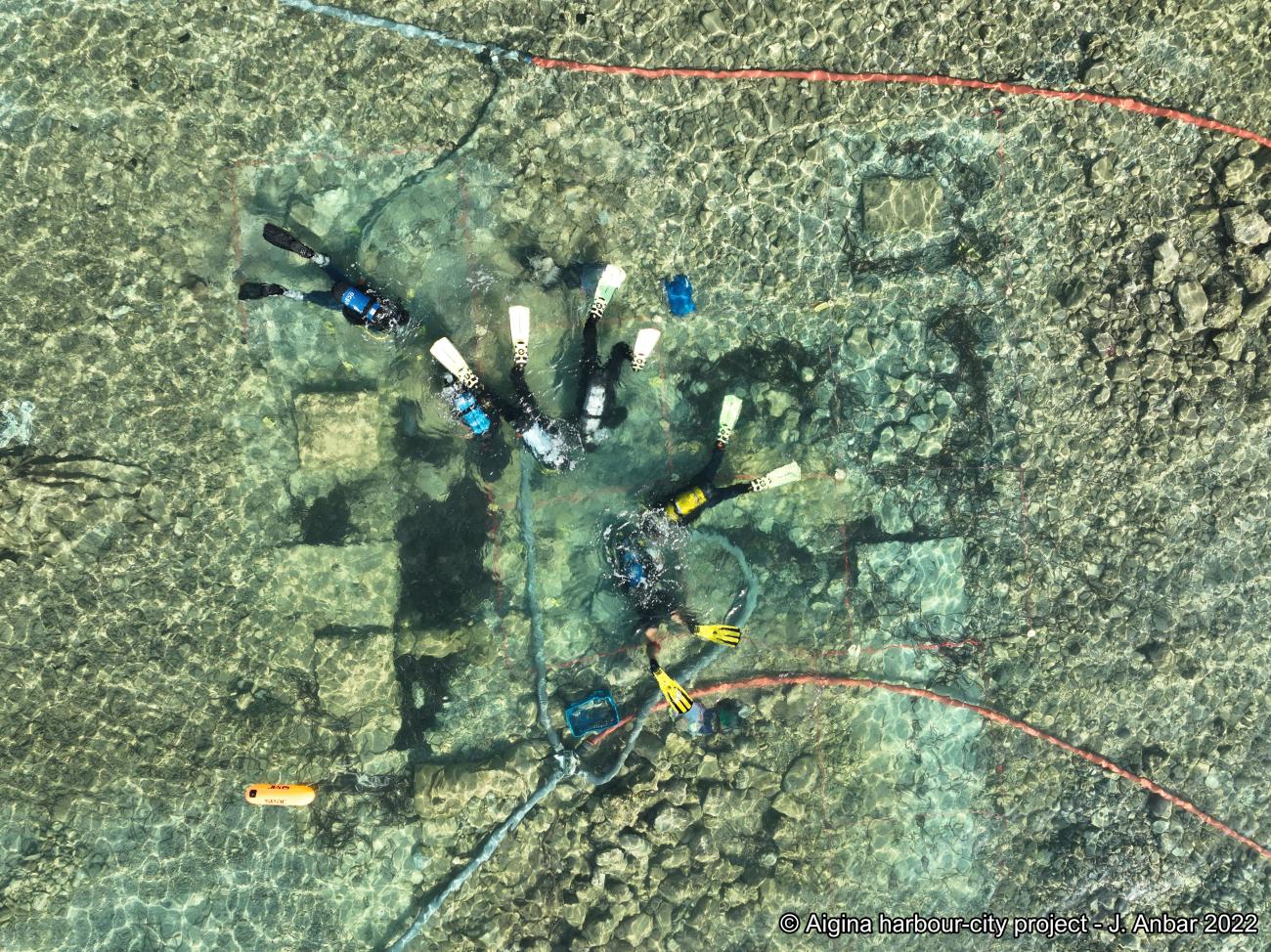
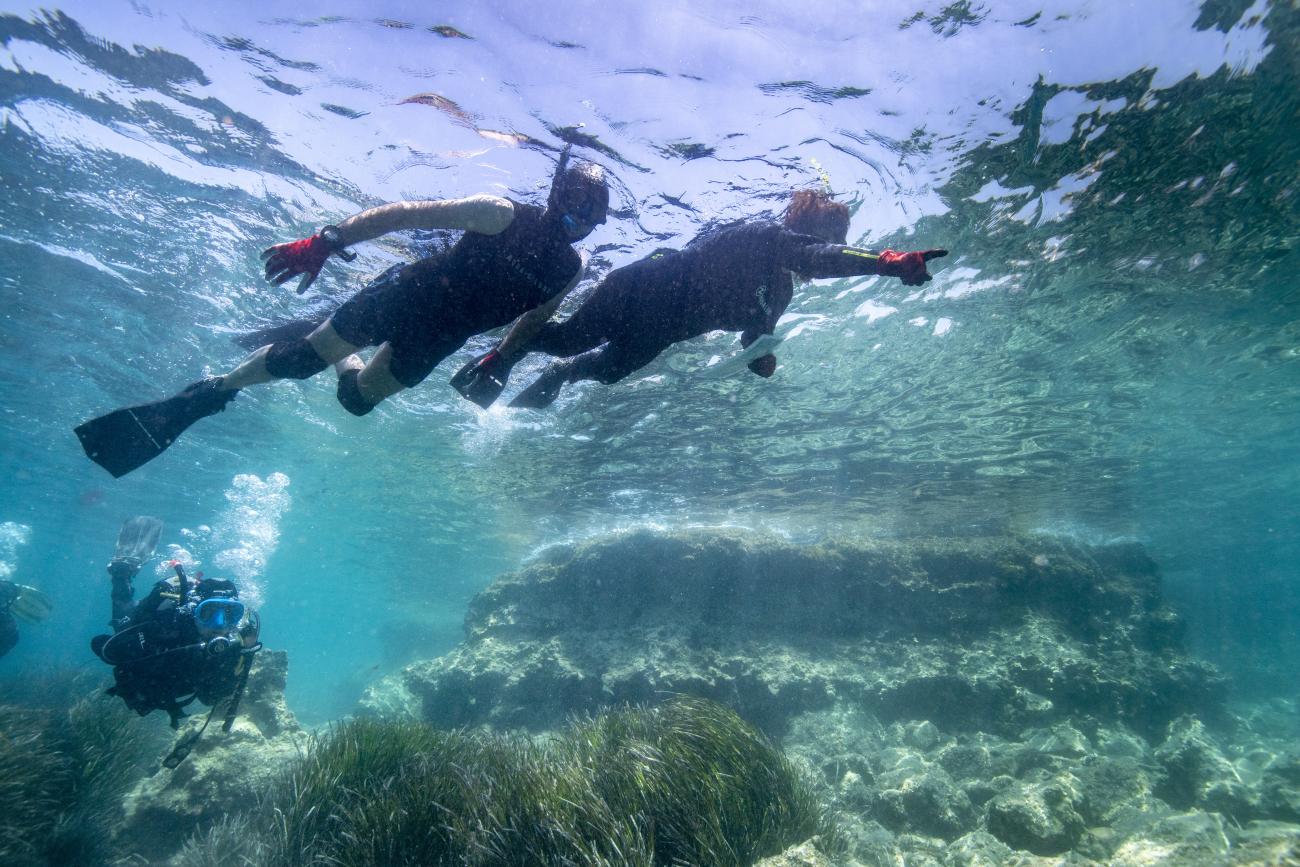
The seafront of the port city of Aegina is now largely submerged, making it one of the best-preserved ancient port cities in Greece. The structures include a fortified military port, the last preserved in this state in the Mediterranean, equipped with boathouses for the fleet of the Eginetes (great rivals of the Athenians), an ancient commercial port, breakwaters and a set of maritime defenses unprecedented in the Greek world. The structures are chronologically situated between the Archaic and Byzantine periods.
Background
Aegina, an island city in the Saronic Gulf, was one of the greatest maritime and naval powers of the Archaic and Classical periods in the Aegean archipelago (8th to 5th centuries BC), thanks in particular to the development of intense commercial activity. The establishment of colonies, from Egypt to the Black Sea, played a major role in its enrichment.
Aegina's fortified ports and maritime installations are mentioned by several historians and geographers, including Thucydides, Strabo and Pausanias. Aegina had a secret war port(Kryptos limenas, according to Pausanias II, 29, 6), visible today in the modern bay of Avra, equipped with two naval bases featuring boat slips(neosoikoi) for housing trieras (rowing boats), and a commercial port, on the site of the island's contemporary harbor. The port area, the acropolis and the entire coastline of the ancient city are protected by a wider network of maritime installations that are now submerged. This consists of a southern breakwater (to the south of the modern city), a northern breakwater (to the north of the acropolis) and a series of conical embankment structures between the two breakwaters, protecting the city's entire seafront. The total surface area of this monumental port project corresponds to three times the size of the ancient urban fabric of the city of Aegina.
With the exception of an underwater survey of the conical defensive structures carried out in 1988 by the Ephorate of Underwater Antiquities, the city's port and coastal installations, in a very good state of preservation and at shallow depth, had never been the subject of systematic research. Some of these structures have no known parallel in the Greek world or, more broadly, in the Mediterranean. The Aegina site is therefore ideally suited to an innovative multidisciplinary and Internationally-oriented project.
Scientific project
Placed under the aegis of Unesco and the École française d'Athènes, this project is coordinated by the Greek Ministry of Culture's Ephorate of Underwater Antiquities and Aix-Marseille Université. It studies the port and coastal installations of Aegina diachronically, from the Archaic period to the end of the Byzantine era. He also proposes a reconstruction of the island's coastal paleoenvironment and maritime façade. The issues of accelerating coastal erosion, relative sea-level change, and the conservation of these remains now in imminent danger, are at the heart of its activities, which are articulated around four priority objectives:
- Interdisciplinary research in coastal and underwater archaeology and geoarchaeology on an unprecedented port complex in the Greek world;
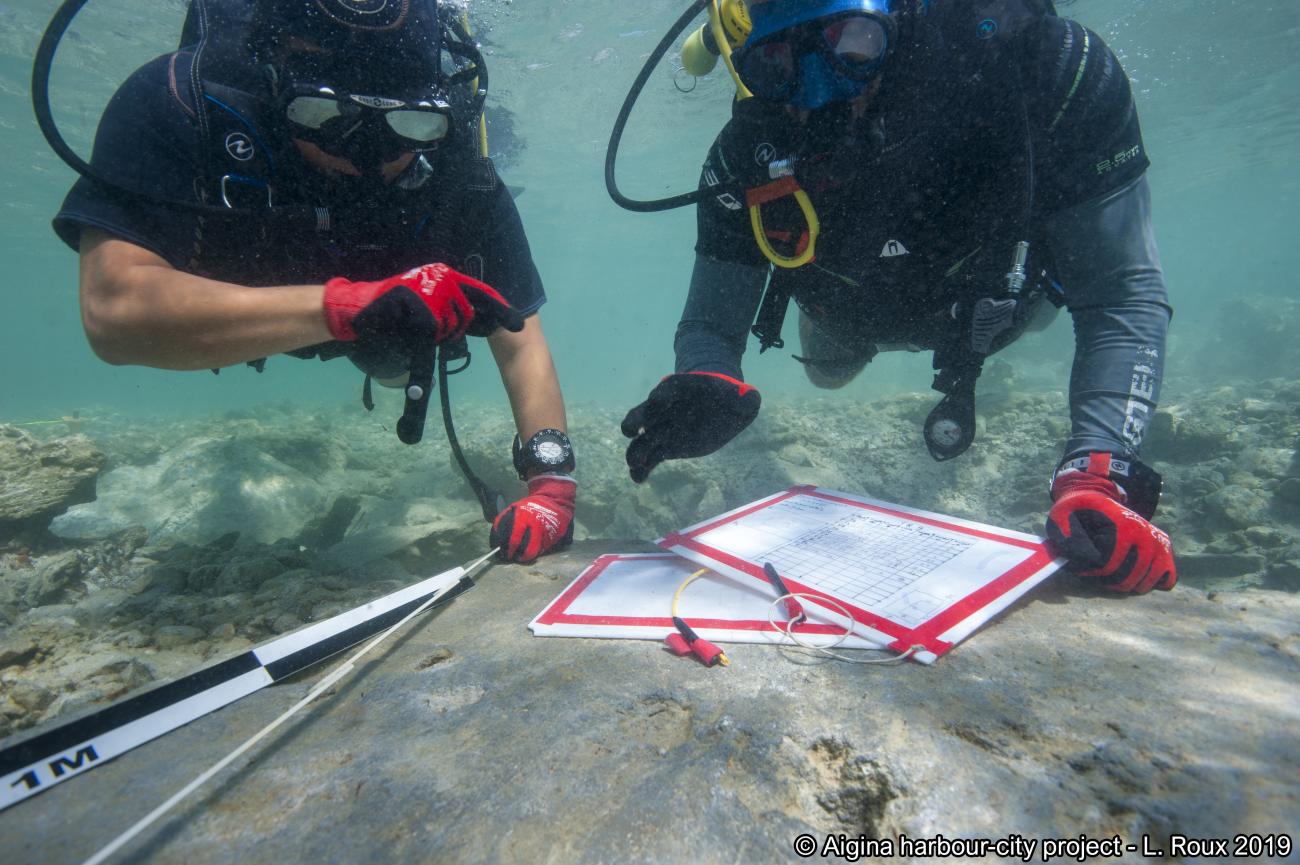
- The development of innovative techniques and methods for underwater data acquisition;
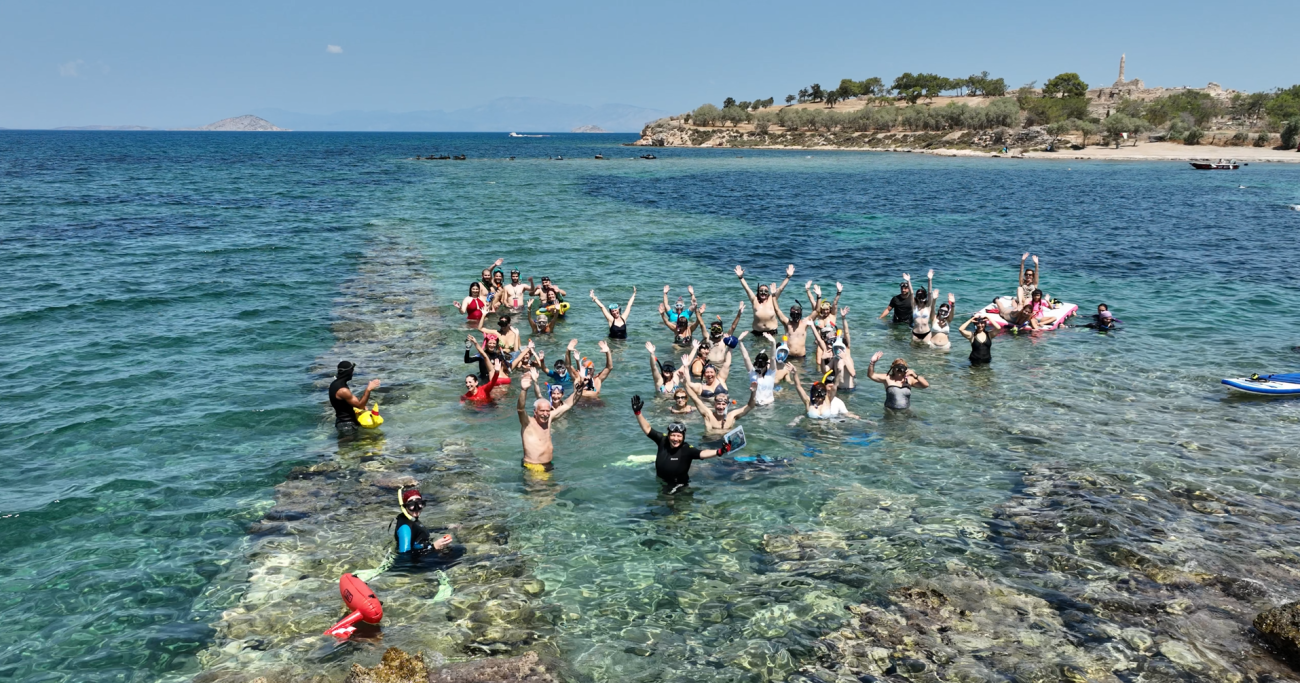
- Training the next generation of Mediterranean maritime archaeologists;
- Protection and enhancement of the site for the benefit of the general public.
The diversity of partners associated with this project illustrates its multidisciplinary nature and the range of scientific approaches deployed in the field and laboratory, including archaeological excavation and underwater and coastal geophysical prospecting, archaeometric analysis, conservation and restoration of remains, and geomatics.
Scientific directors
- Pari Kalamara (Historical Archives of the National Bank of Greece)
- Despina Koutsoumba (Ephoria of Underwater Antiquities)
- Kalliopi Baika (AMU - CCJ)
- Jean-Christophe Sourisseau (AMU - CCJ)
Institute laboratory involved
- Center Camille Jullian (CCJ)
Partner institutions and teams
- Ephorate of Underwater Antiquities (Greek Ministry of Culture)
- French School of Athens
- University of Patras
- National and Capodistrian University of Athens
- University of the Peloponnese
- Johannes-Gutenberg University of Mainz
- Istituto superiore per la conservazione ed il restauro (Italian Ministry of Culture)
Further information
37.747320983221, 23.424509128425