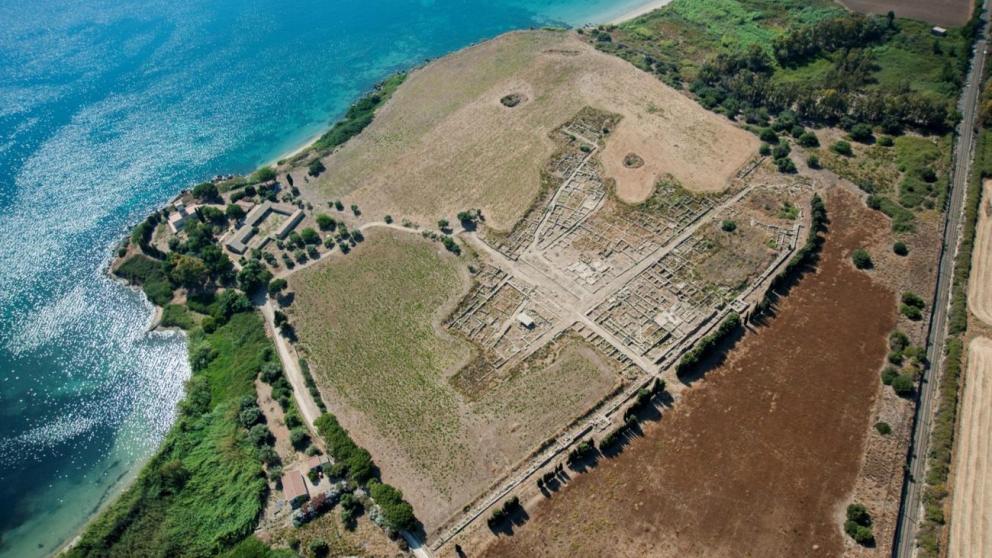
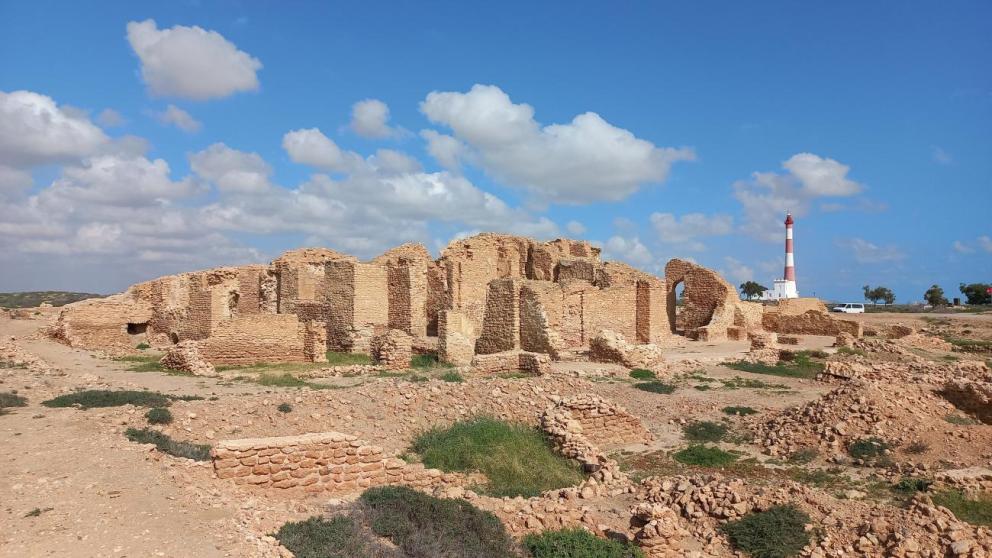
The Megara, Aegina & Thaenae: a Mediterranean network of training field schools on ancient coastal cities (MANTA Network) project aims to create a scientific synergy between three large-scale field operations already well established in the Mediterranean research panorama. It aims to strengthen Aix-Marseille Université's partnerships to build a research-based training network in an Internationally competitive environment.
A network of training sites for the study of ancient Mediterranean port cities
The archaeological study of ancient Mediterranean port cities is one of the Centre Camille Jullian's core research themes. It mobilizes the skills of many of the laboratory's researchers, teacher-researchers and engineers, who for many years have been deploying a fundamentally interdisciplinary and intersectoral approach to the subject, now recognized Internationally. The MANTA Network project aims to create a scientific synergy between three large-scale field operations that are already firmly established in the Mediterranean research landscape, by strengthening our international partnerships and building an international training network led by Aix-Marseille Université and its partners.
The three laboratory sites envisaged, located in the heart of the Mediterranean - Megara Hyblaea in Sicily, Thaenae in Tunisia and Aegina in Greece - offer the opportunity to address, on a cross-Mediterranean scale and over the long period of antiquity (8th c. BC - 5th c. AD), the essential issues of the ancient world.C.), the main scientific questions of the current archaeological discipline: the birth of the city in the Mediterranean, the conception and evolution of urban structuring, its defense, the organization of funerary spaces and funerary practices themselves, the integration and development of port areas, the management of water resources, the organization of agricultural spaces, the vegetal and morphological environment of communities. The Centre Camille Jullian is recognized as a specialist in these issues, which can only be tackled through an interdisciplinary approach. What's more, these networked sites could provide an opportunity for our researchers and students to tackle new contemporary heritage issues. Today threatened by urbanization and/or the consequences of climate change, they are all observatories and heritage laboratories that are the subject of innovative approaches that are already at the heart of tomorrow's professions.
Training through and for research Internationally
The aim of this Training through Research project is to prepare future generations of archaeologists on both sides of the Mediterranean for these new scientific and heritage challenges. It is the concrete expression of a network of three "chantier-écoles" that are already mature in terms of research, well identified Internationally and integrated into a strong network of partnerships through solid relationships with local players in charge of archaeological heritage (i.e. the National Heritage Institute of Tunisia, the Ephorate of Underwater Antiquities of Greece and the Archaeological Superintendency of Syracuse), the academic world (notably the universities of Sfax and Athens, members of the CIVIS Alliance) and the EFE / UMIFRE (Écoles françaises de Rome et d'Athènes, IRMC).
Enrolled in master's and doctoral programs at Aix-Marseille Université and in institutions in the three partner countries, the beneficiary students will be welcomed to the field schools during the annual field sessions, where they will be trained in land and underwater archaeological excavation methods, data recording and 2D and 3D survey technologies. At the same time, workshops will be organized in the laboratories of partner institutions and the Aix-Marseille site to extend the training to other skills applied to artifacts, samples and data collected during excavations (i.e. study of ceramics, human and animal bones, physical and chemical analyses, 3D image processing). In this sense, the project will be fully integrated into the "Archaeology, sciences for archaeology" Master's and Doctoral training programs at Aix-Marseille Université.
While the networked archaeological operations are fully conducive to the training and development of students, they are also genuine scientific operations that meet international standards, and for which the group of researchers/teacher-researchers involved in the project is a guarantee of high added value in terms of specialized communications and publications on the one hand, and real recommendations in terms of safeguarding and managing coastal archaeological heritage on the other. As part of the project, two workshops and a closing international symposium will be organized to promote the results and advances. Finally, the project's international networking will lead to the preparation of European projects.
Funding organization
- Aix-Marseille Université - Amidex Foundation
Funding scheme
- AAP Internationally 2022 - Research and Training
Project timetable
- March 2024 - February 2029
Scientific managers
- Reine-Marie Bérard (CNRS - CCJ)
- Kalliopi Baika (AMU - CCJ)
- Solenn de Larminat (CNRS - CCJ)
- Jean-Christophe Sourisseau (AMU - CCJ)
Operational manager
- Josipa Mandić (AMU - CCJ)
Institute laboratories involved
- Center Camille Jullian
- European Research and Teaching Center for Environmental Geosciences
- Institute for Research on Ancient Architecture
- Laboratory of bio-cultural anthropology, law, ethics and health
- Mediterranean Institute of Biodiversity and Ecology
Partner teams and institutions
- French School of Rome
- French School of Athens
- Research Institute on Contemporary Maghreb
- + 13 academic, institutional and cultural partners in Italy, Greece, Tunisia and Germany