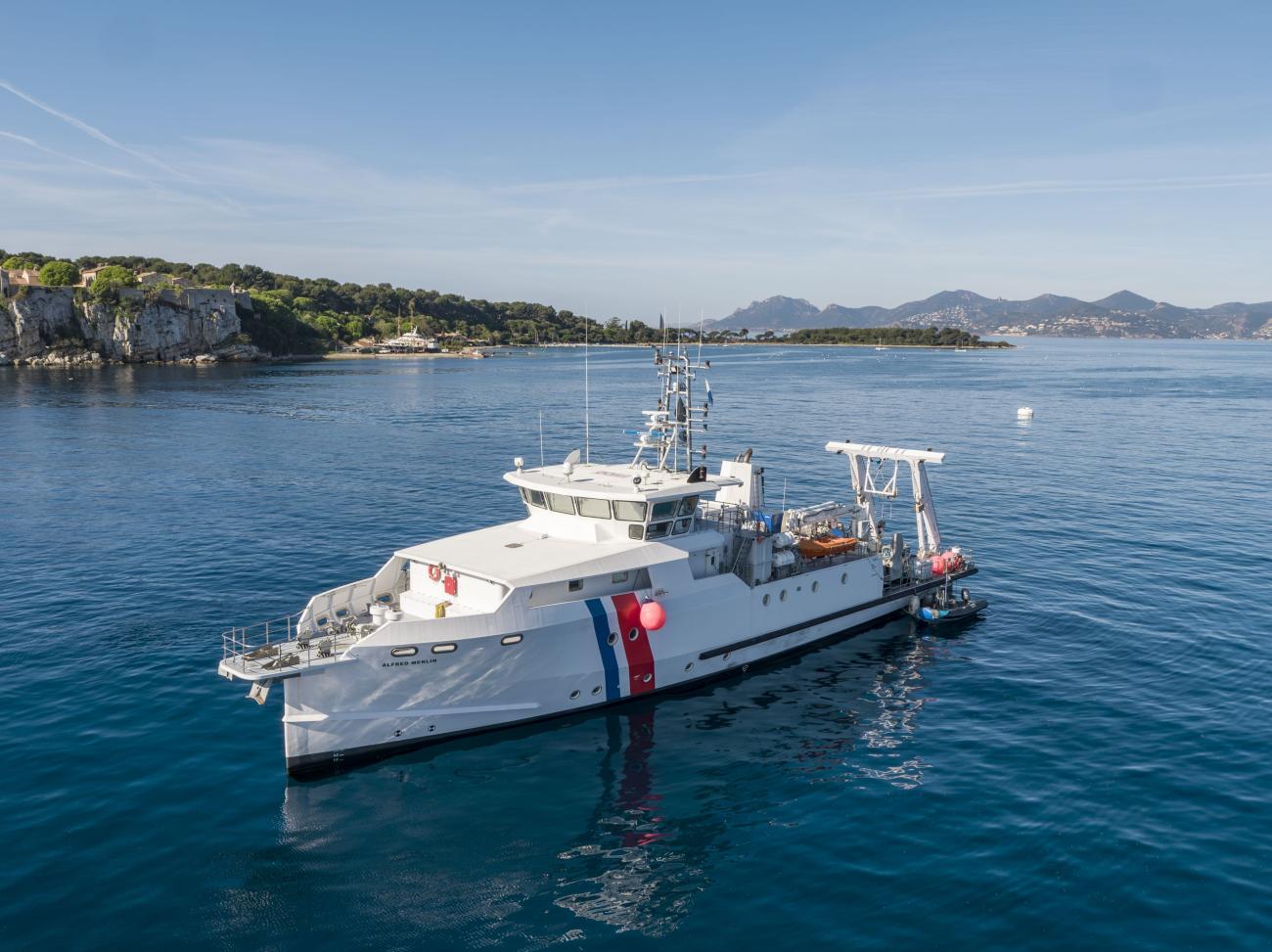
Located off Cannes, not far from the island of Sainte-Marguerite, the wreck Fort-Royal 1 takes its name from the main fortification built on the island in the 17th century - a building famous for having held the mysterious Man in the Iron Mask captive from 1687 to 1698. And, contrary to what its name might suggest, it is in fact the wreck of a Hellenistic trading ship, not a modern military vessel...
The operation
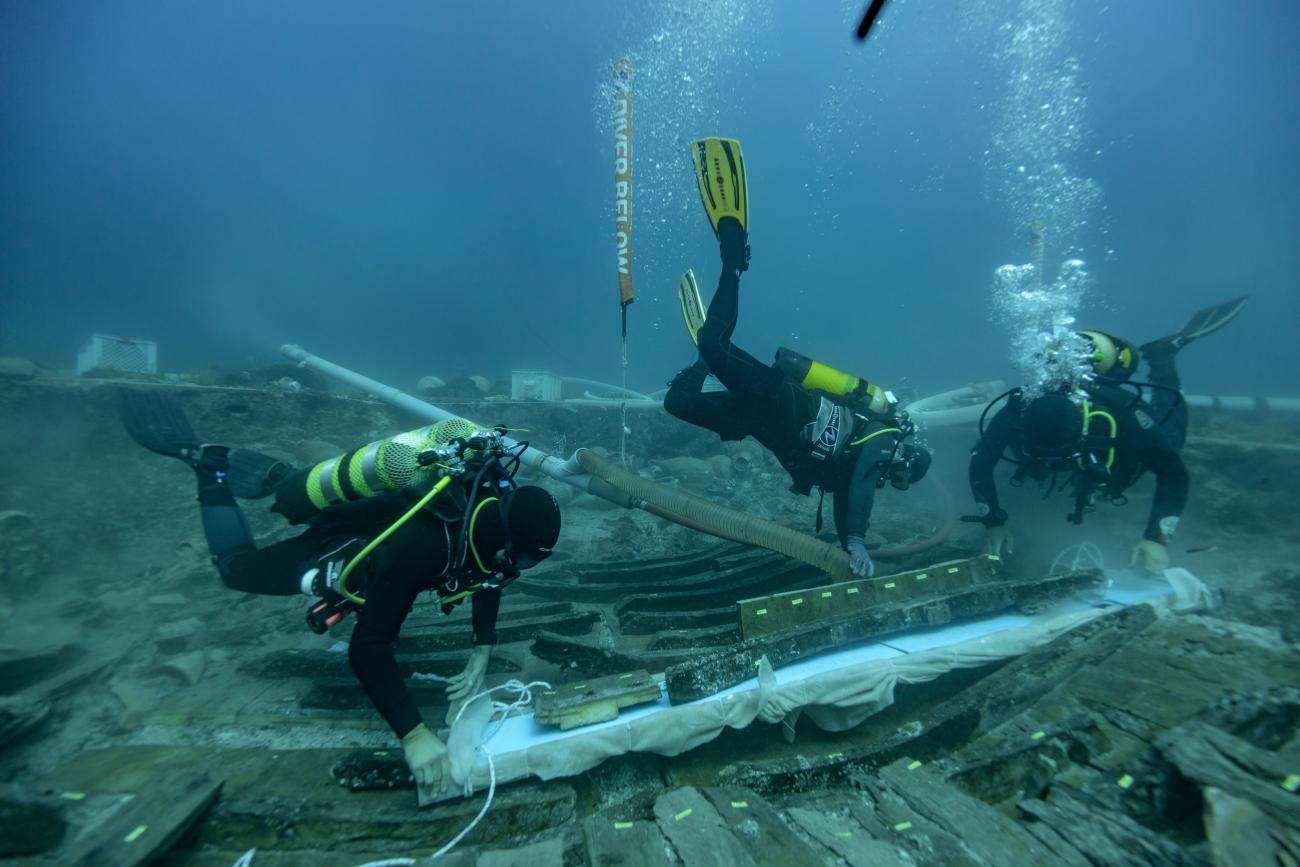
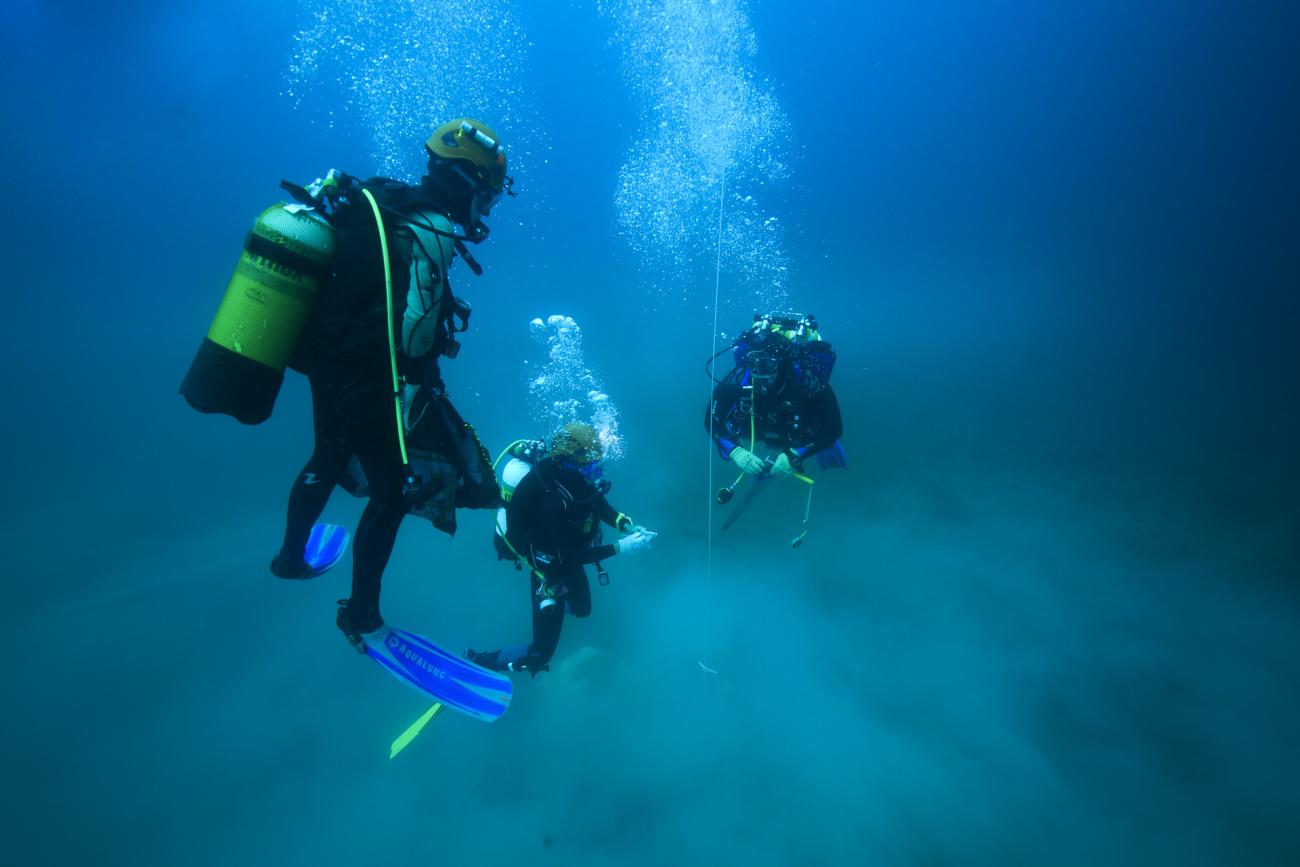
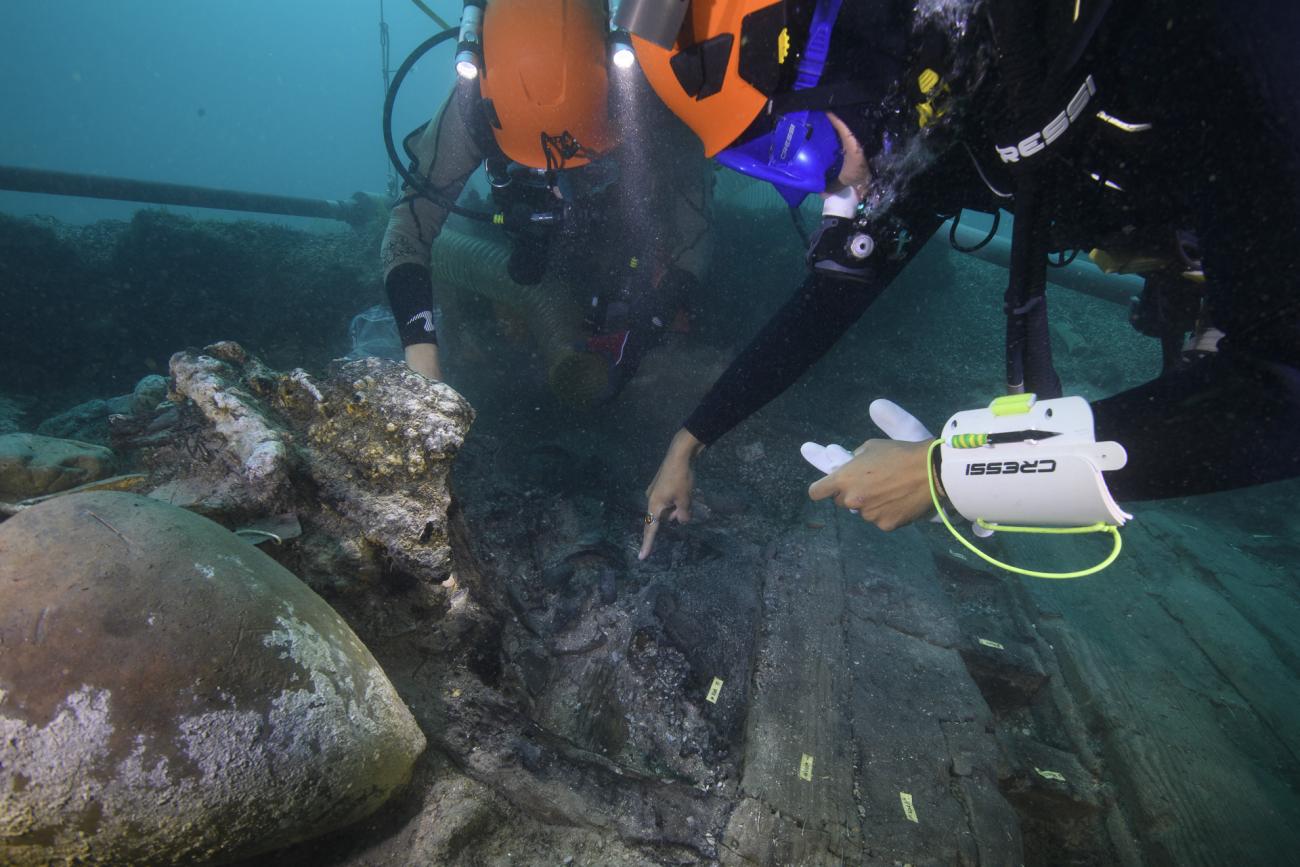
Discovered in 2017, the Fort-Royal 1 wreck first hit the headlines following its resounding looting between 2021 and 2022. The site, half-open over a very long section, was emptied of its amphorae by looters whose work was interrupted by teams from the Drassm and Centre Camille Jullian when the 2022 excavation campaign was launched. Since then, the wreck has been the subject of a multi-year programmed excavation project (2023-2025) under the joint direction of Franca Cibecchini and Pierre Poveda.
The cargo
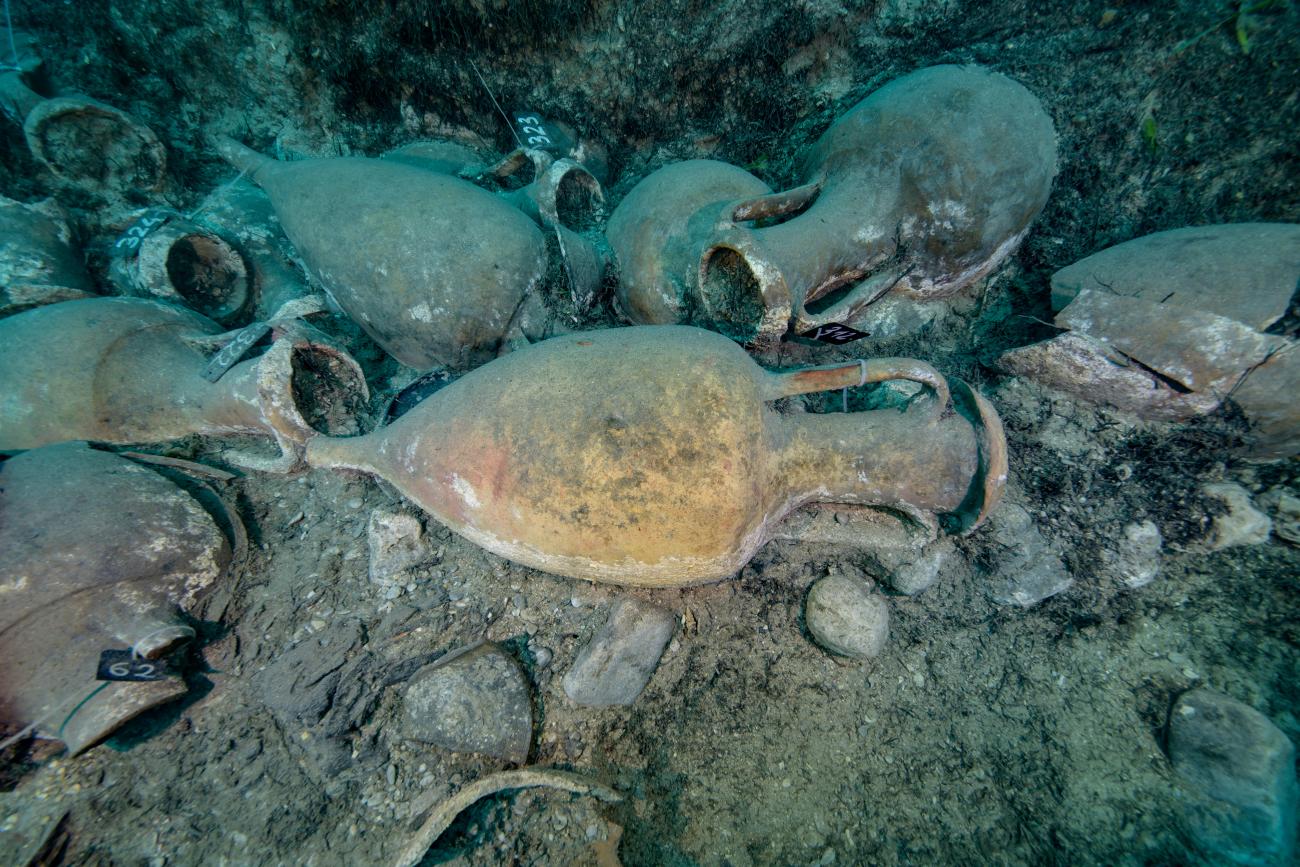
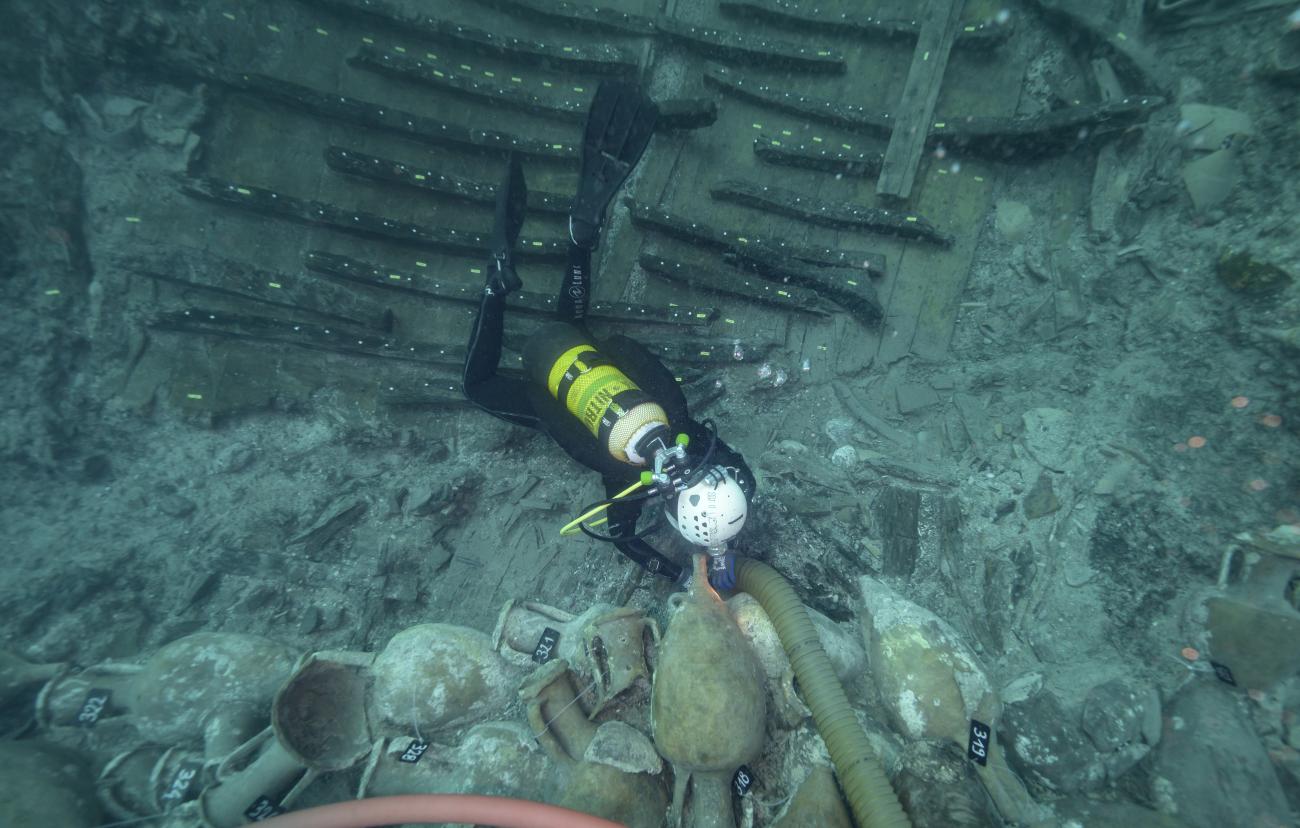
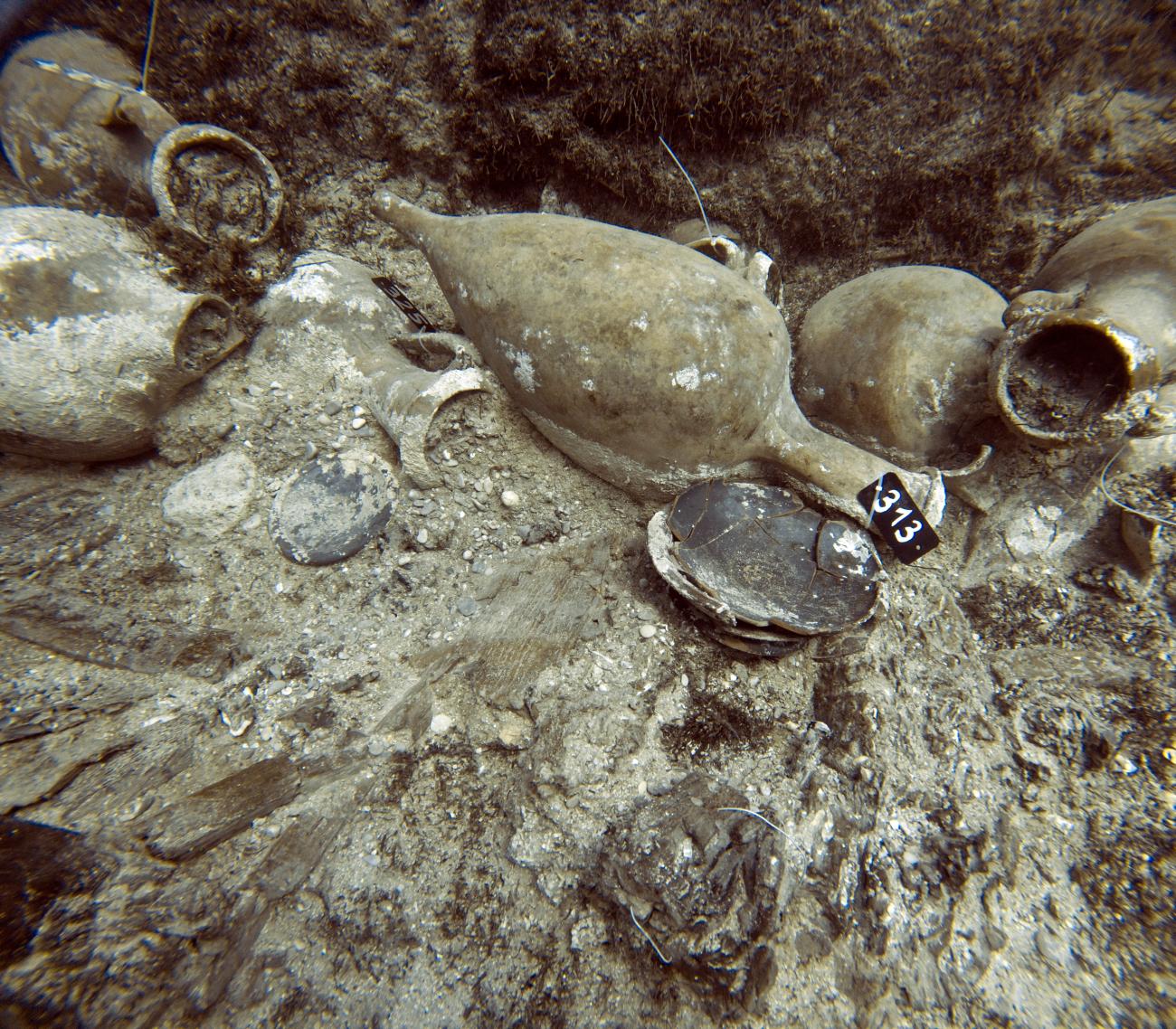
The ship's cargo appears to consist exclusively of Greco-Italian amphorae for transporting wine, stacked on at least two levels, the exact number of which is difficult to estimate. So far, between complete or almost-complete amphorae and fragmentary amphorae, and including those seized by the gendarmes, over 300 "individuals" have been recovered. Within this group, two modules can be distinguished: a large one, corresponding to amphorae 87-90 cm high, and a smaller one, with amphorae 68 to 72 cm high.
The amphorae from the cargo and the fine ceramics converge to date the shipwreck to the first decades of the 2nd century BC, probably around 180 BC.
Ship architecture
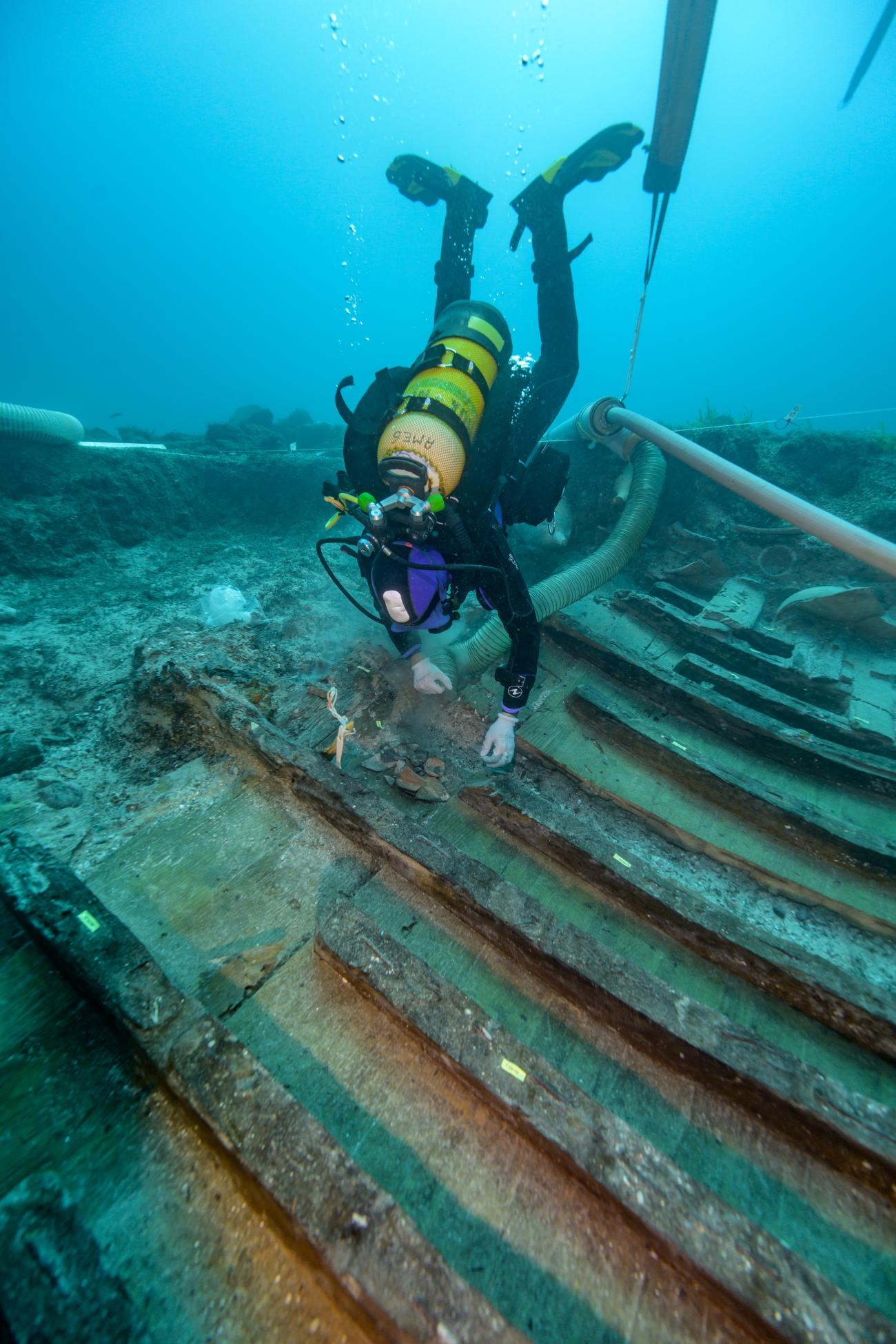
From a construction point of view, the wreck of Fort-Royal displays the usual characteristics of Hellenistic trading ships in the western Mediterranean: a planking joined to the planking by means of pegged mortise and tenon joints; a frame joined to the planking by means of nails driven in from the outside, the point of which is folded over the back of the frame.
As far as the dimensions of the original ship are concerned, it seems difficult to give anything more than an order of magnitude at this stage. Despite a relatively modest sampling of its structural parts, we can already deduce from the remains that the width of the boat must have been at least 6 meters. This suggests a length of around 20 m, roughly in line with the intact loads of Greco-Italian vessels found at great depths in Corsica.
Conclusion
Although the Fort-Royal 1 wreck was the victim of terrible looting, it remains a site with very high archaeological potential. Fortunately, the clandestine salvage of a large proportion of the amphorae spared parts rich in information, such as the lazarette area, and does not appear to have reached the hull levels. The archaeological potential of the wreck remains considerable, and it is still possible to carry out an exhaustive study of the cargo and hull of an important Hellenistic-period merchant ship on the intact areas. A multi-year excavation plan is currently underway to protect all the wreck's furnishings from potential predators and damage, and it is hoped that they will soon join the collections of one of Cannes' museums for public display.
Scientific managers
- Franca Cibecchini (Ministry of Culture - Drassm)
- Pierre Poveda (CNRS - CCJ)
Institute laboratories involved
- Center Camille Jullian
- Mediterranean Institute of Biodiversity and Ecology
Partner teams and institutions
- Département des recherches archéologiques subaquatiques et sous-marines (French Ministry of Culture)
- Center for Underwater Archaeology of Catalonia (Girona, Spain)
- Musée départemental Arles antique
- Société Ipso Facto (Marseille)