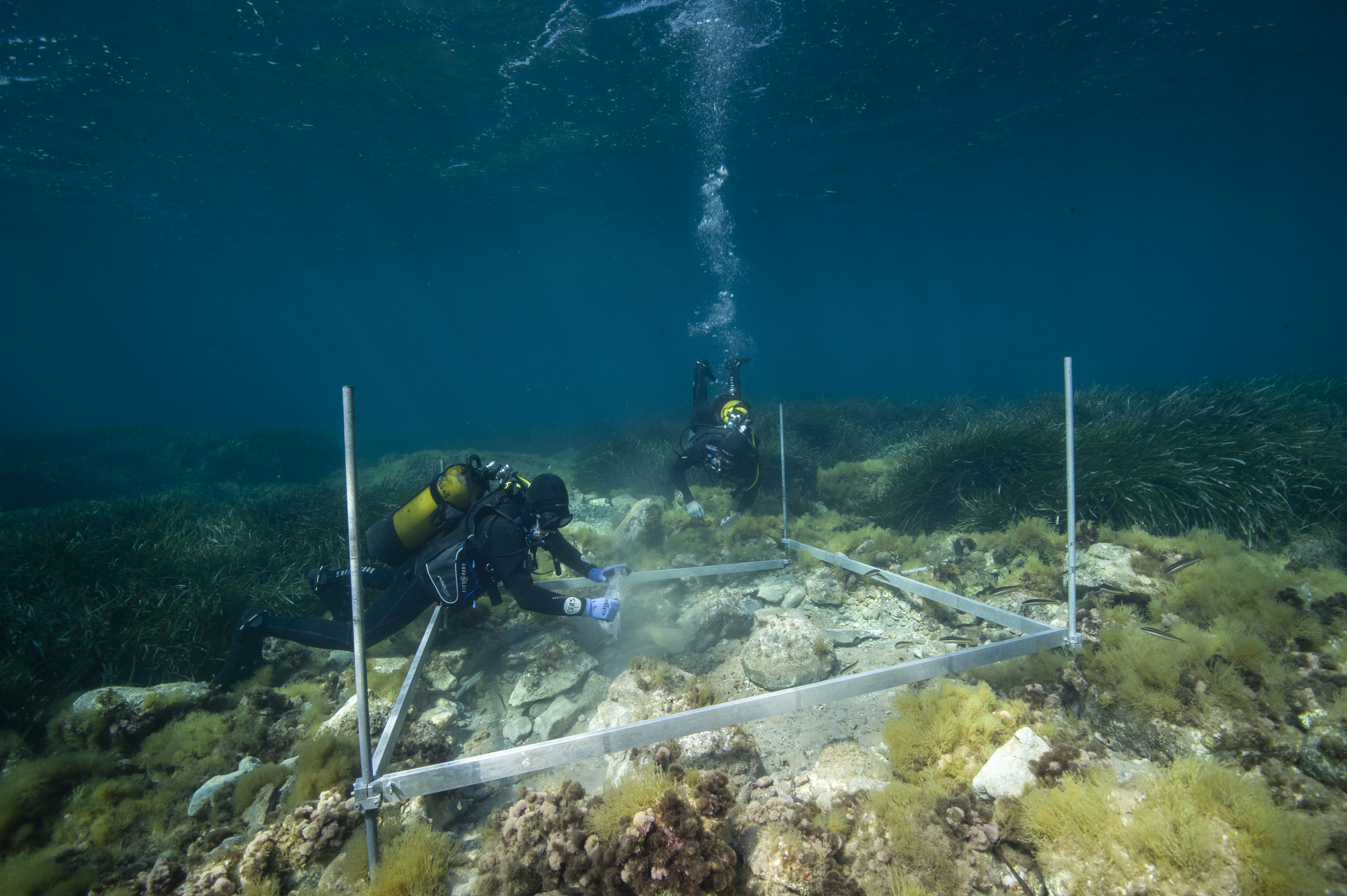
Since 2018, the submerged remains of the coastal development at Olbia de Provence, a Massalian settlement founded in the 4th century B.C. at the western root of the double tombolo of Giens (Hyères, France), have been the subject of a revival of ancient documentation and, since 2019, of new archaeological excavation campaigns aimed at establishing the period(s) of their construction, determining their function(s) and studying the construction techniques used.
The Greek colony of Olbia is located at the foot of the southeastern slope of the Mont des Oiseaux, on a strip of coastline bordering the Gulf of Giens at its northeastern end, which still overlooks the Mediterranean waters by around 4.50 m. After coming under Roman rule in the 1st century B.C., Olbia changed its function and turned to trade and thermal baths, as demonstrated by the new architectural program of public baths built along the shoreline (Thermal Baths of the Seaside). At the same time, the urban area was acquiring sea-facing infrastructures.
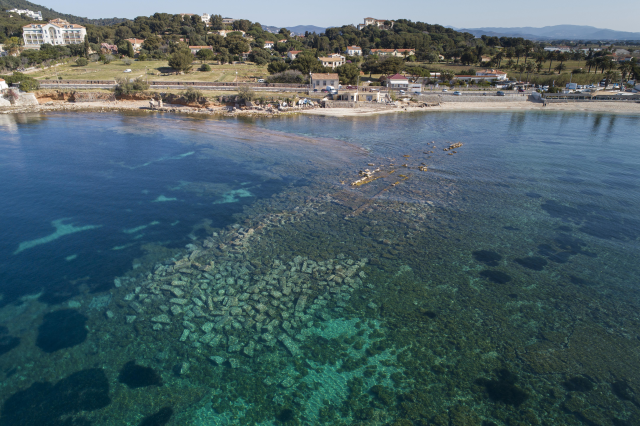
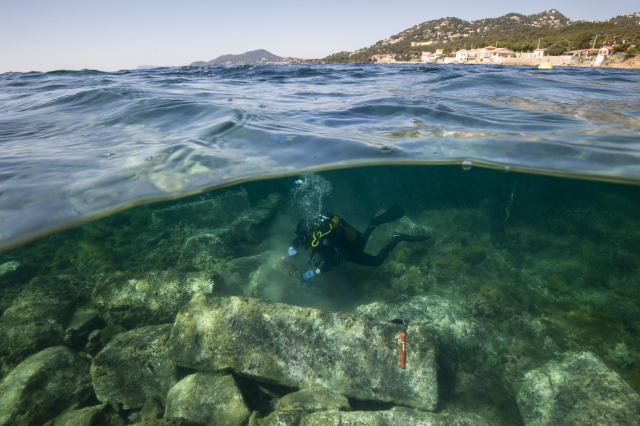
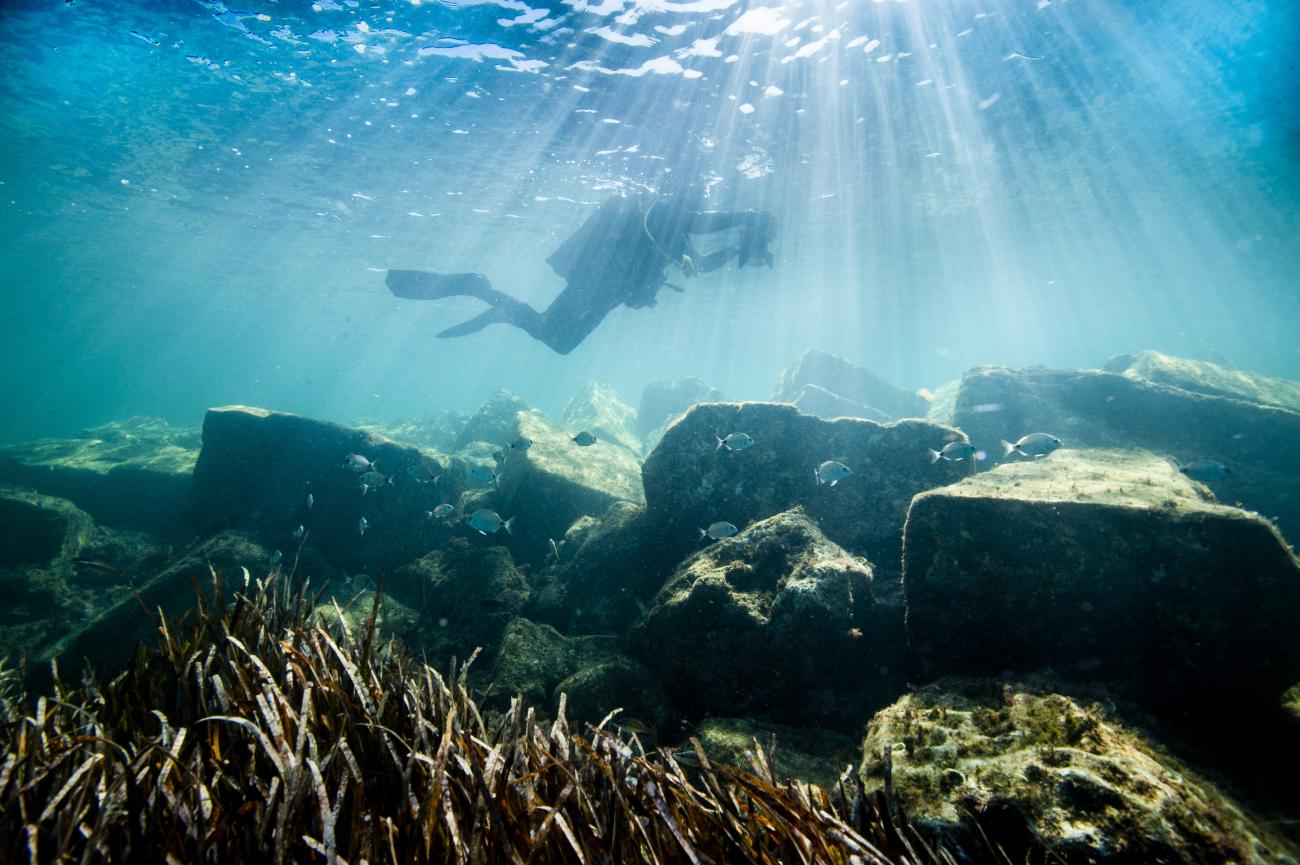
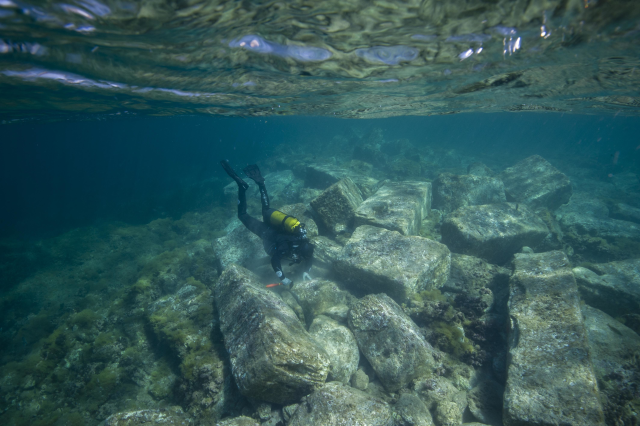
The remnants of these coastal structures, noted as early as the 19th century and studied in the 1950s and again in the late 1990s and early 2000s, are now largely submerged, lying between the current shoreline and 5.00 m depth. During high tidal coefficients, some of them emerge. Two long alignments of parallel cut stones can then be seen jutting out into the sea towards the Giens peninsula. At the west-south-west end of these alignments, more than a thousand dressed stones can be seen from the surface, at a depth of between 2.00 and 5.00 m, over an area of almost 1,000 m². These were probably part of an imposing building that no longer exists. These two contiguous architectural ensembles differ from one another in the nature of the construction techniques used and the dimensions of the blocks and ashlars that make them up. Until now, they had not been surveyed on an appropriate scale (large scale) to enable an exhaustive study of the various traces of implementation: horizontal sealing, vertical sealing, clamp holes, etc. These were mostly found on the surface of the stone. These were mostly masked by a thick layer of marine flora.
Begun in 2018, with a first field campaign in 2019, the Research program on the submerged littoral structures of Olbia de Provence is being led by the Centre Camille Jullian (CNRS, Aix-Marseille Université) and the Institut national de recherches archéologiques préventives (Inrap). From 2019 to 2022, this program has been financially supported by the Fonds de dotation Archéologie et Patrimoine en Méditerranée(Arpamed) and Aix-Marseille Université's Institute for Mediterranean archaeology (ARKAIA), then, from 2023 onwards, by the town of Hyères and the Département des recherches archéologiques subaquatiques et sous-marines (Drassm).
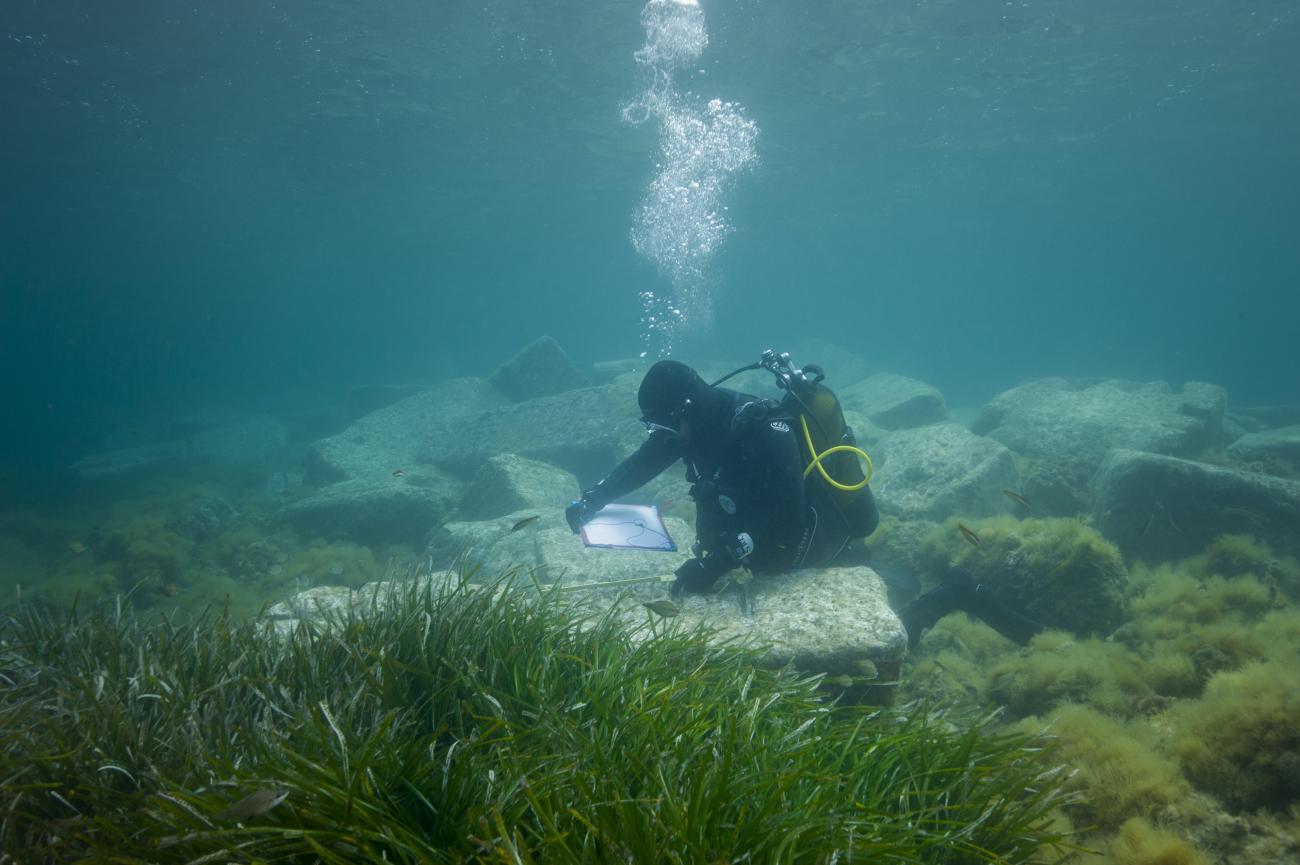
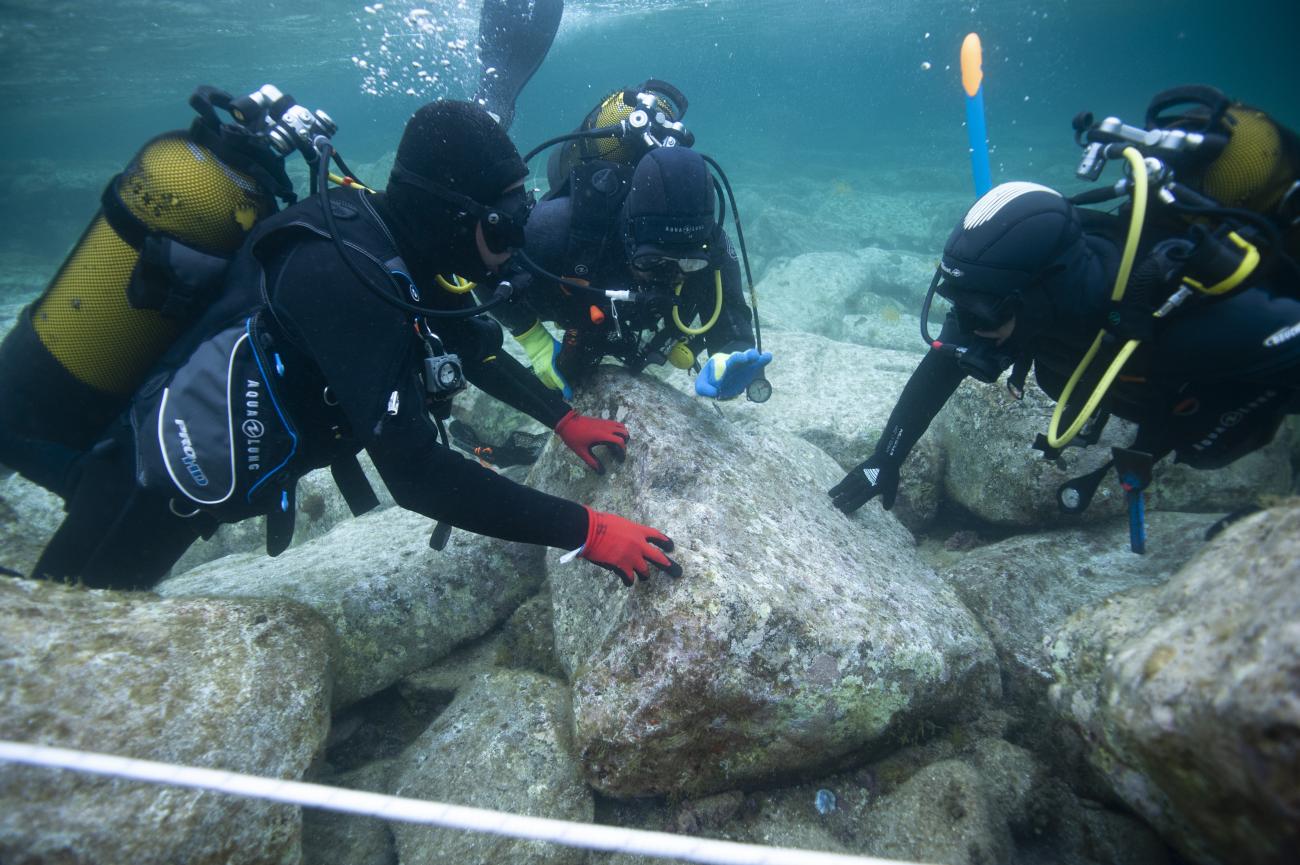
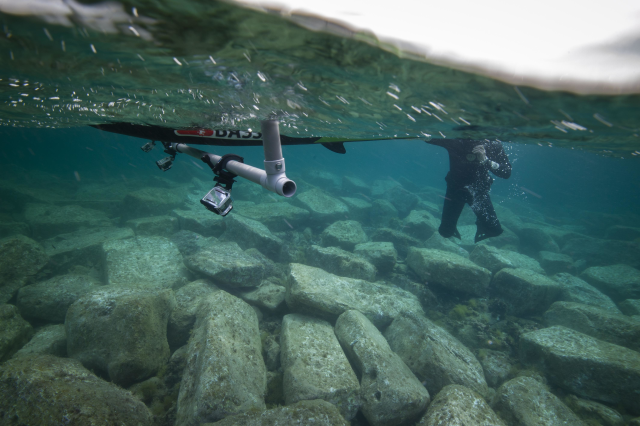
In addition to the stratigraphic surveys, and using digital techniques such as close-up photogrammetry, very precise, high-resolution planimetric and three-dimensional documentation has been produced, enabling the construction techniques used to be examined and studied. Prior to this, the architectural remains in place, as well as the ashlars and architectural blocks, were manually cleared of the plant gangue that covered them.
In 2022, as part of an interdisciplinary project supported by ARKAIA, the archaeological excavation campaigns were supplemented by a series of sediment cores in partnership with CEREGE, with the aim of gaining a better understanding of the context in which these remains were built and, more specifically, attempting to define their relationship with the indurated coastline to the north-northwest.
Thanks to the cleaning of architectural structures, stratigraphic surveys, exhaustive three-dimensional surveying and the study of construction processes, this work has advanced our knowledge of the nature and function of these coastal structures. The furniture collected from the foundation massifs of one of the architectural structures now allows us to modify or refine the hypotheses previously accepted in the scientific literature as to the chronology and, above all, the function of these coastal constructions.
Scientific managers
- Laurent Borel (CNRS - CCJ)
- Alex Sabastia (INRAP - CCJ)
Institute laboratories involved
- Center Camille Jullian (CCJ)
- European Center for Research and Education in Environmental Geosciences (CEREGE)
Partner institutions and teams
- Institut national de recherches archéologiques préventives (French national institute for preventive archaeological research)
- Archéologie et Patrimoine en Méditerranée" endowment fund
- City of Hyères, Culture and Heritage Department, Olbia archaeological site
- French Ministry of Culture, Department of Underwater Archaeological Research