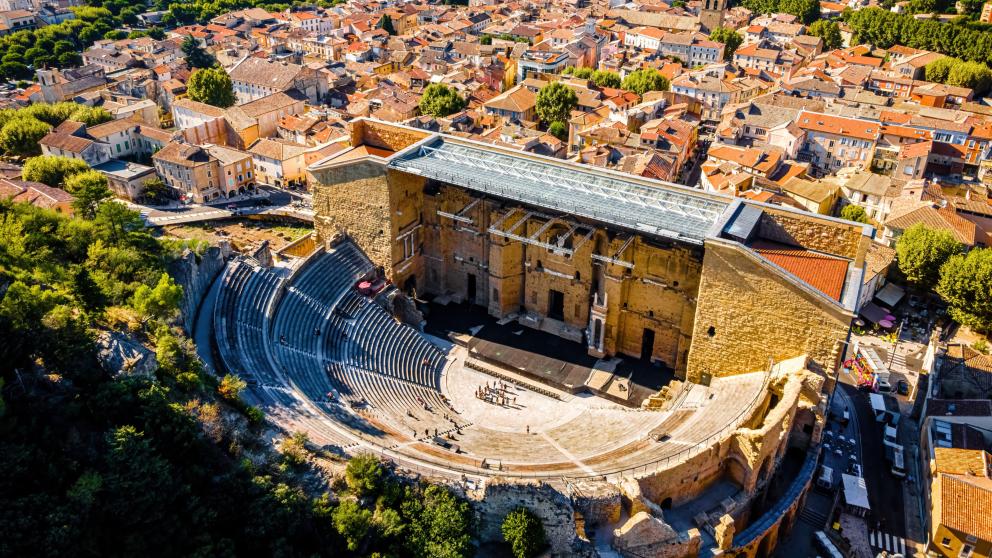
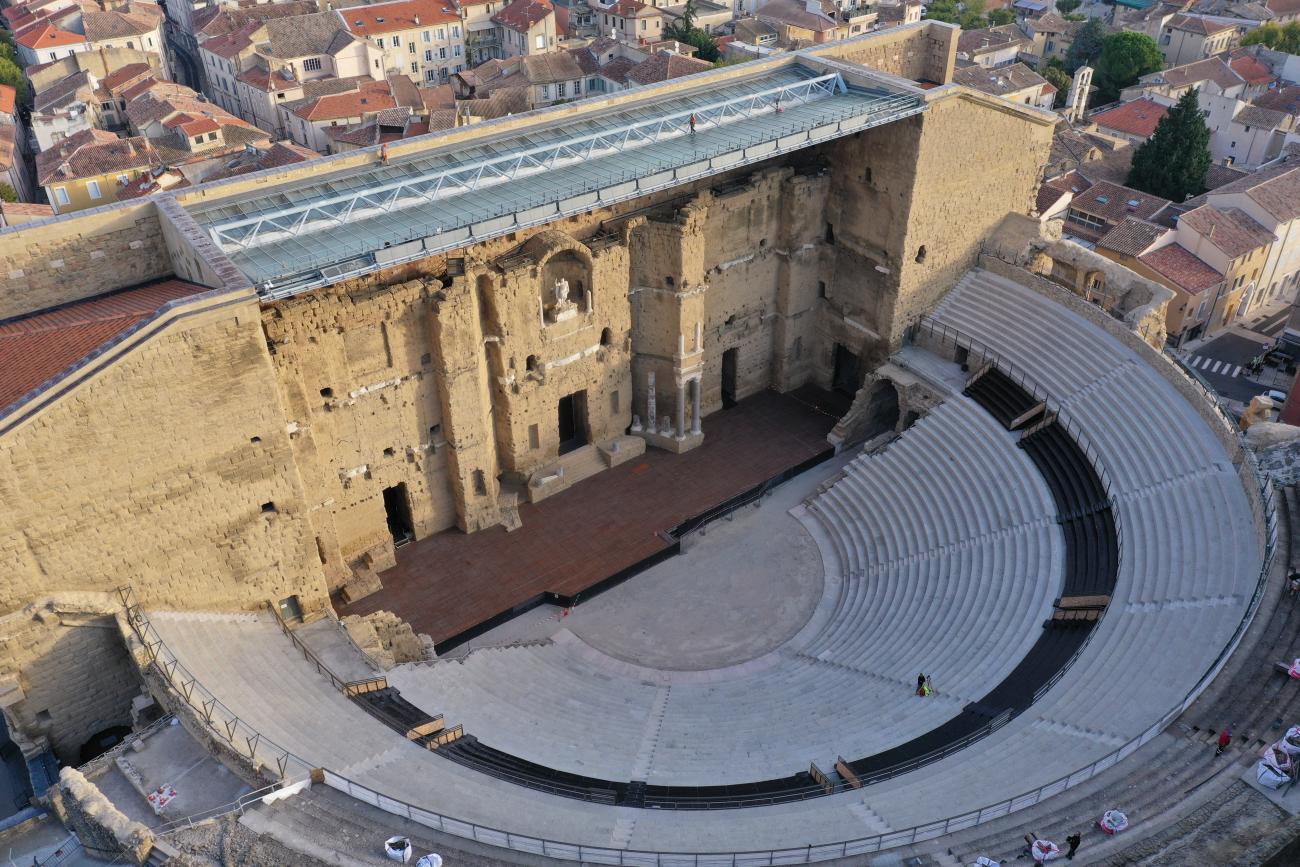
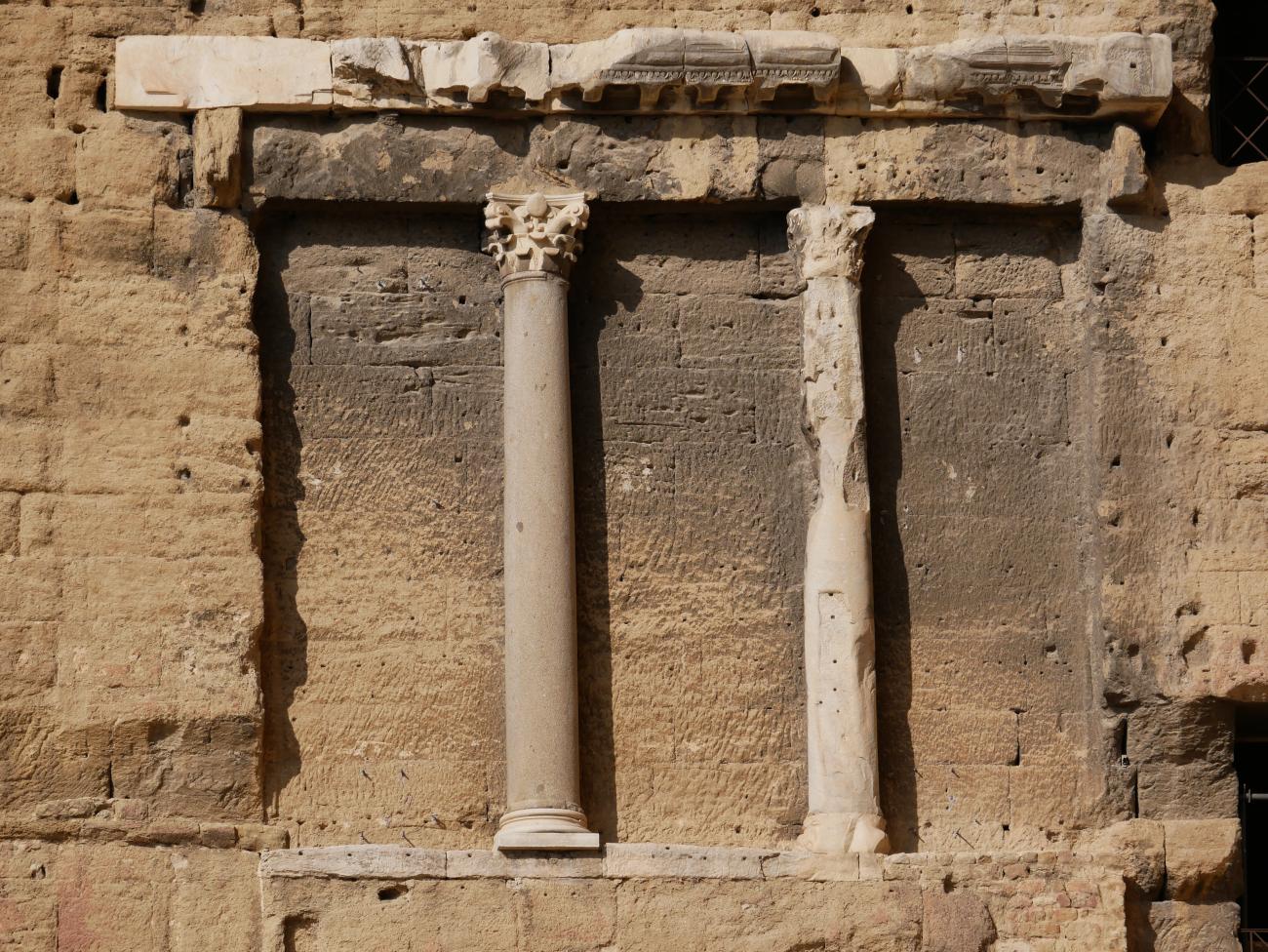
Listed as a UNESCO World Heritage Site, the Orange theater has been at the heart of a vast campaign to secure and restore its facings since 2015. The IRAA, under the direction of Sandrine Borel-Dubourg, is responsible for the archaeological monitoring of these works, which represent an exceptional opportunity to deepen the archaeological study of this major monument in the history of architecture.
The multi-year restoration campaign
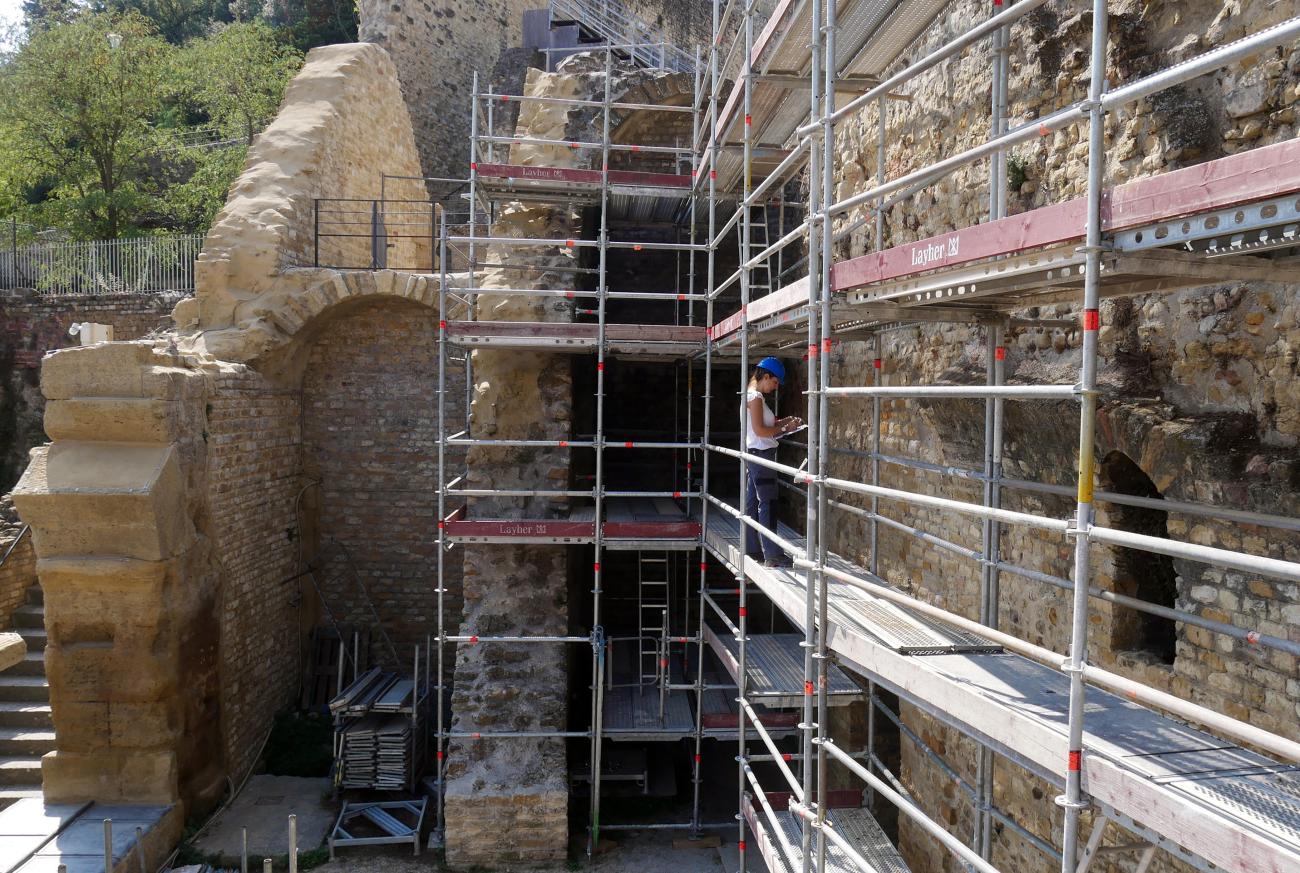
In 2015, the city of Orange, owner of the monument, launched a project to secure the facings of the ancient theater in the face of the risk of falling boulders. This project, managed by the Architecture et Héritage agency, represents an exceptional opportunity to advance the architectural study of the monument that the IRAA has been carrying out for several decades. In partnership with the PACA region's Service régional de l'archéologie and Conservation régionale des monuments historiques, the archaeological survey will begin in 2016, as part of the Programme collectif de recherche (PCR) "Théâtre Antique (Orange, 84)". The latter is financially supported by the Mairie d'Orange, the Direction régionale des affaires culturelles PACA, the CNRS, and since 2019, the France 2030 program, under the initiative of Aix-Marseille Université.
Archaeological monitoring of work
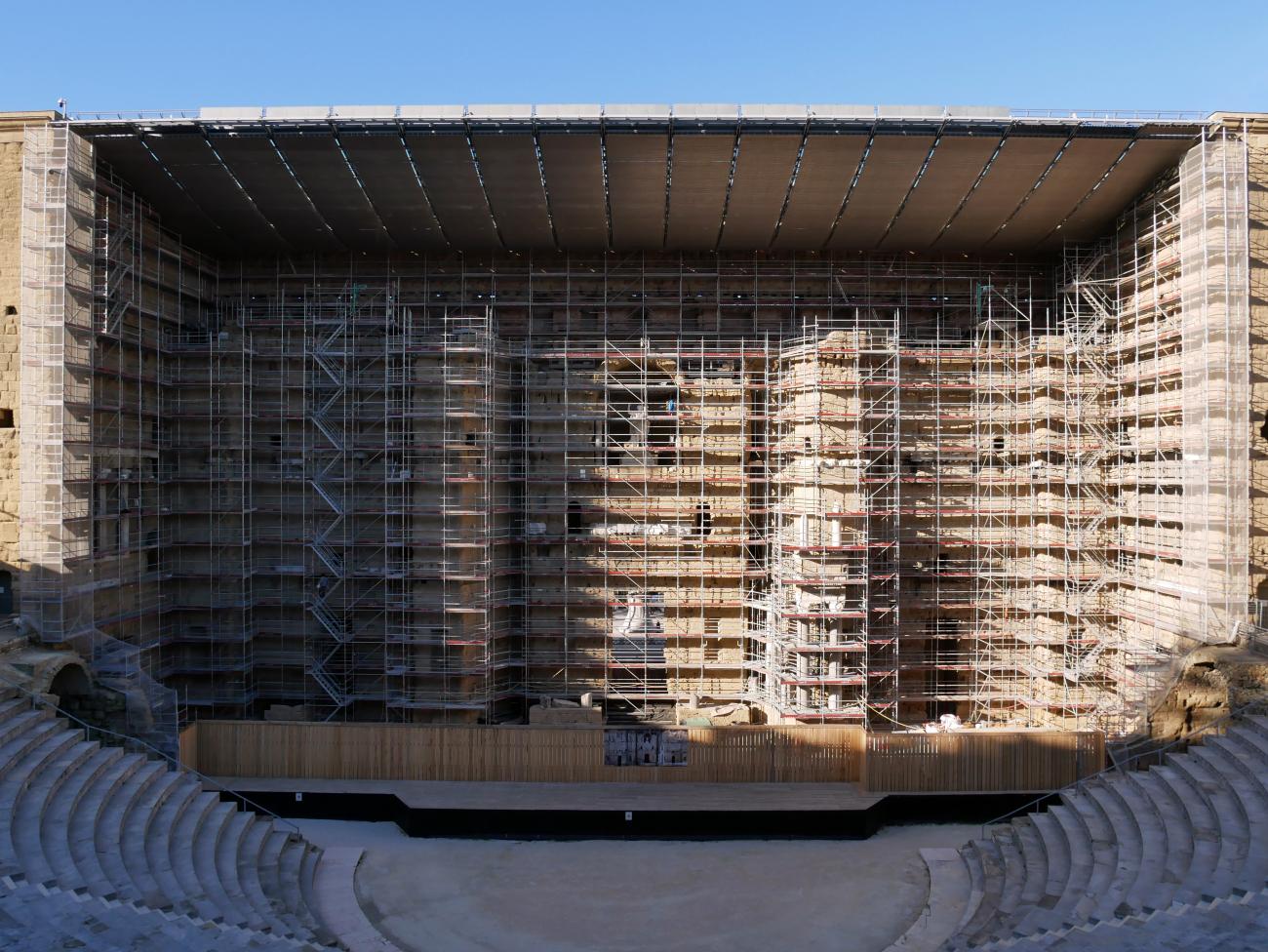
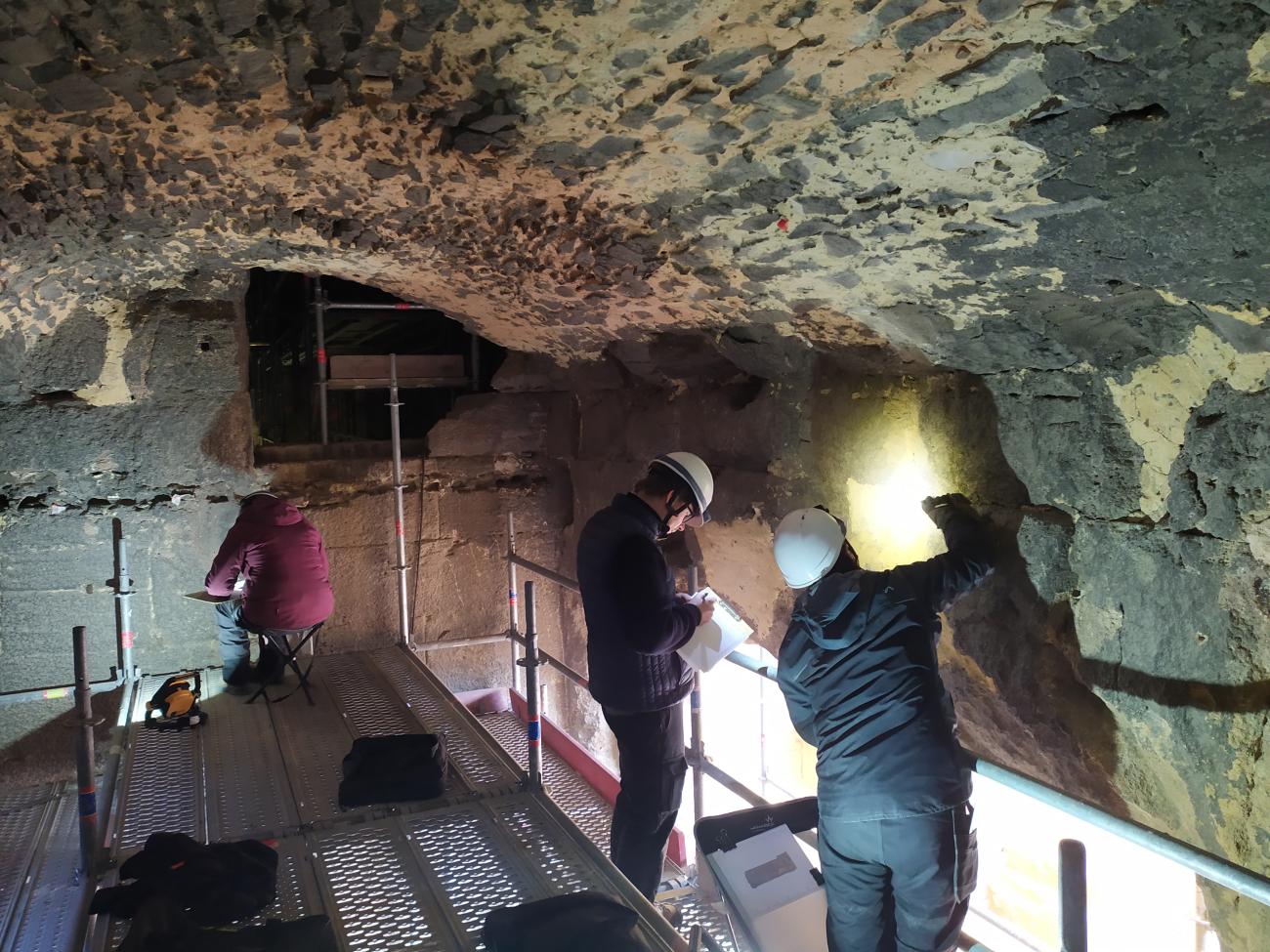
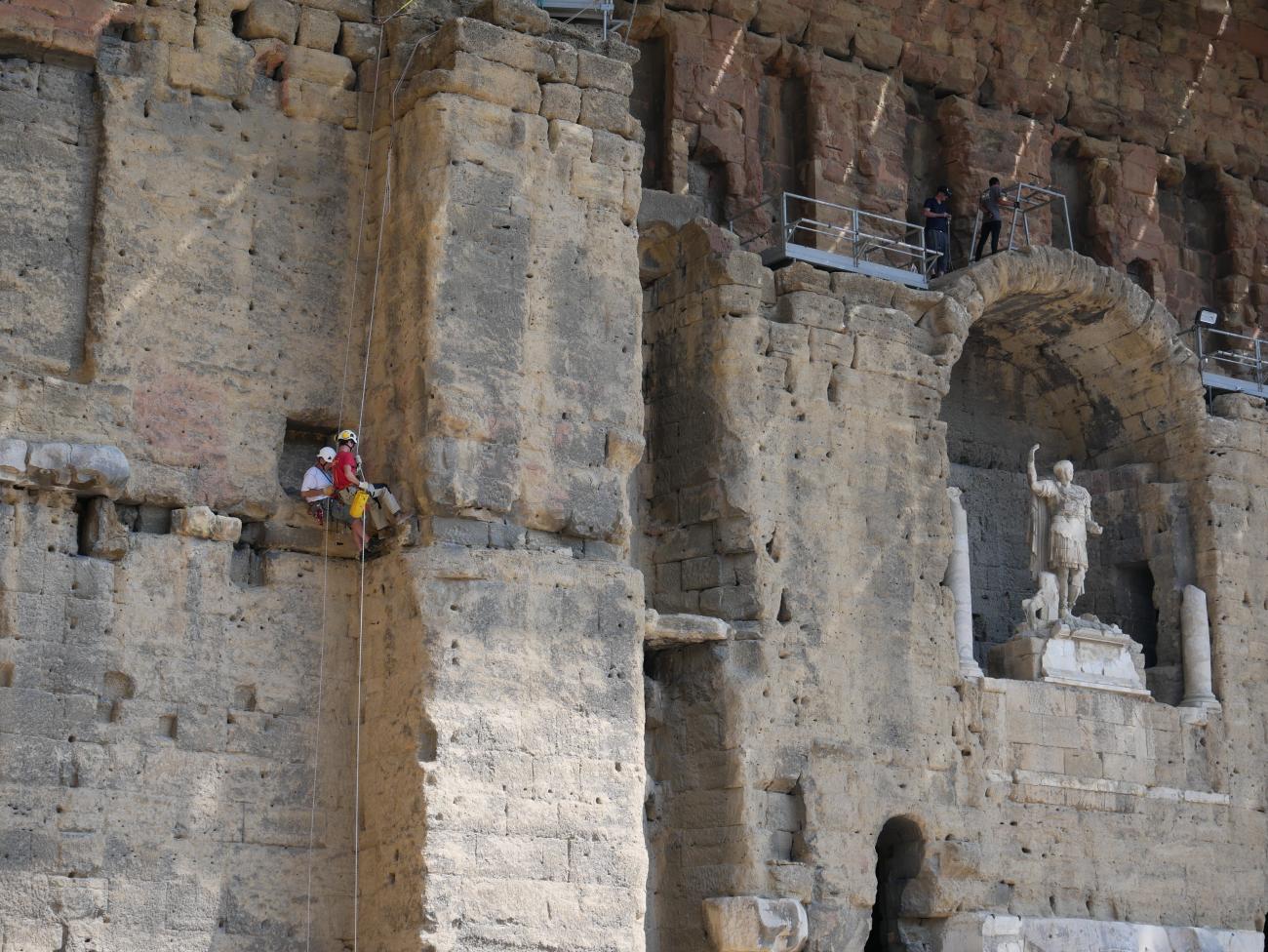
Work to make the monument safe is organized in annual phases, each dedicated to a particular sector. The work takes place from September to May, to free up the theater for summer shows. Archaeological monitoring is carried out jointly with the restoration companies. It includes weekly meetings to adjust protocols and coordinate interventions. The main objective is to document the monument before any cleaning or consolidation work is carried out, which could result in the loss of a great deal of archaeological information. The process includes a precise architectural survey, accompanied by a stratigraphic analysis of the theater's elevations, with the aim of gathering information on its evolution from its construction to the present day.
The multidisciplinary scientific team mobilized for this work includes architects, archaeologists and CNRS researchers, as well as specialists in archaeometry and geomatics. The IRAA in charge of field operations is collaborating with members of several laboratories, such as TRACES and AOROC, and within the scope of the Institute for Mediterranean archaeology (ARKAIA): CCJ, LA3M and CEREGE, whether for the analysis of building materials or the implementation of specific digital acquisition techniques.
Method and tools used
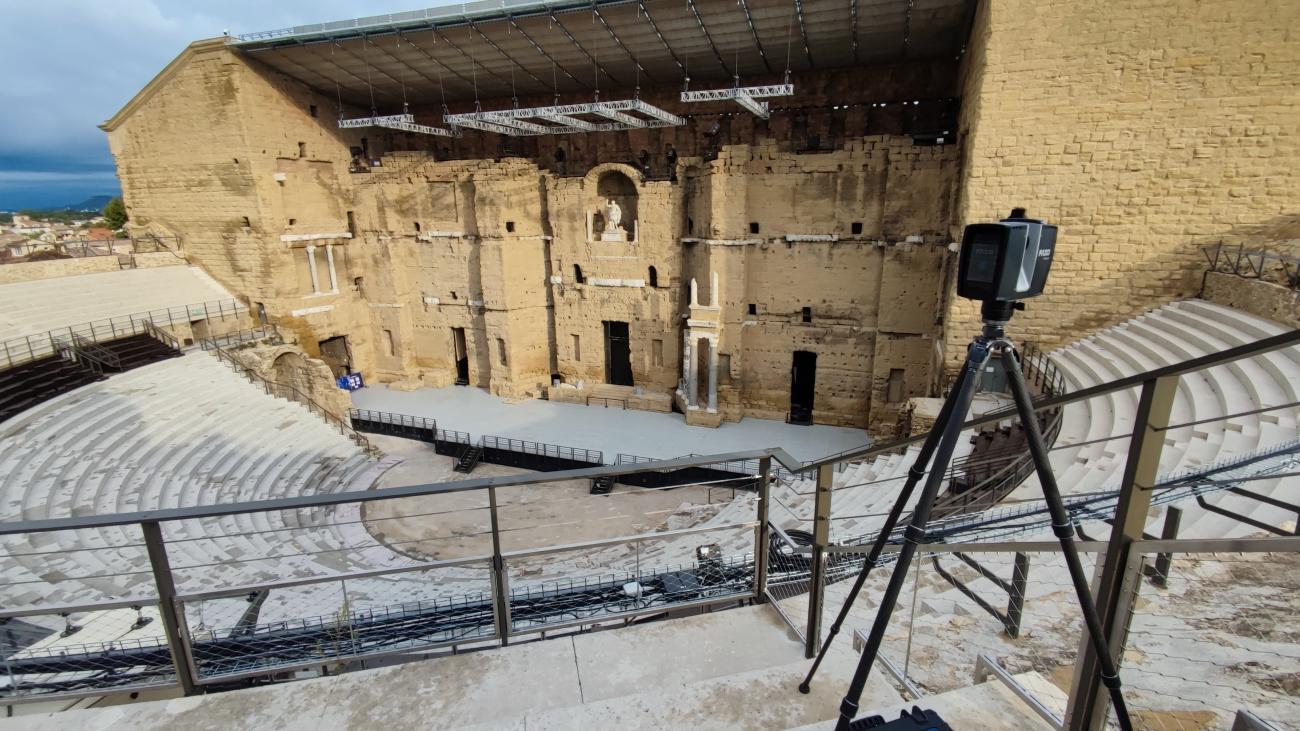
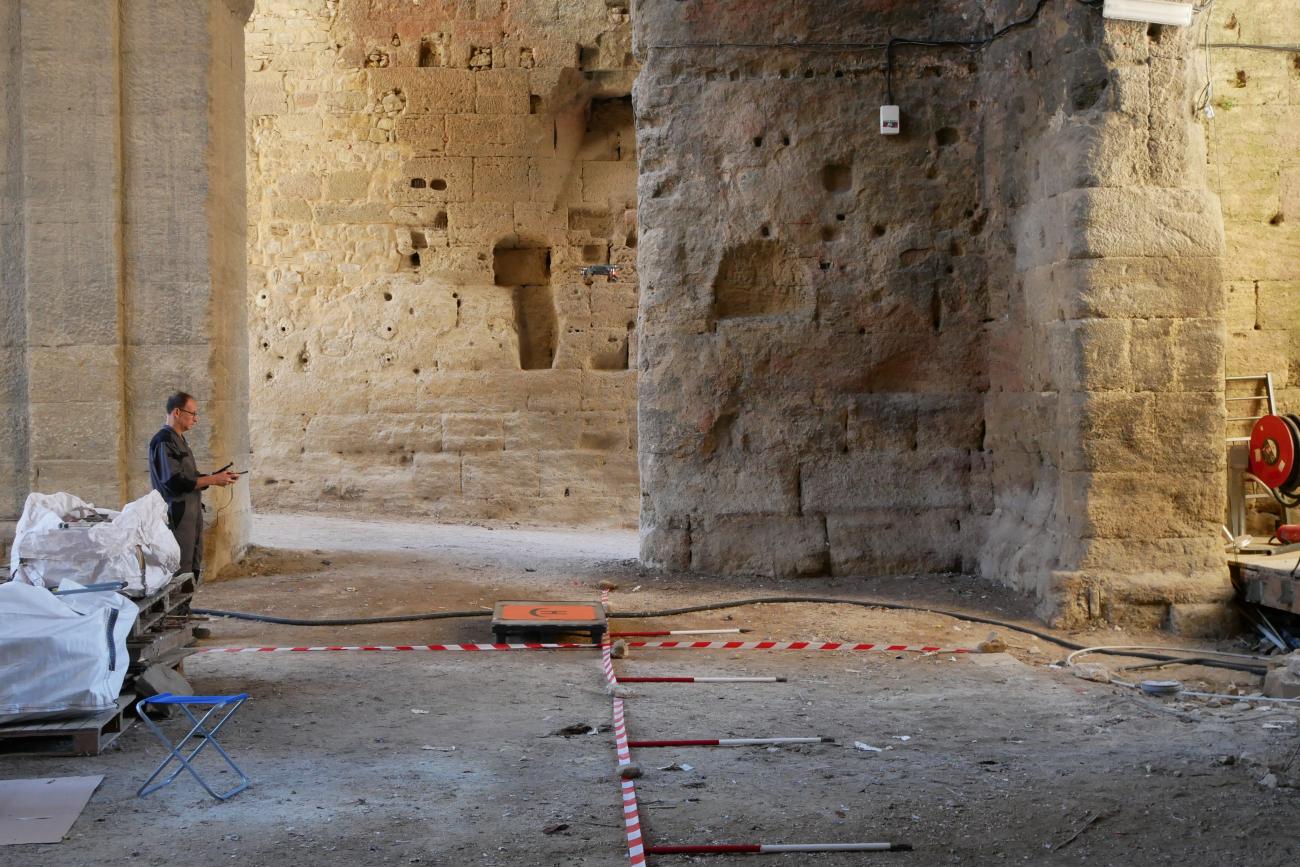
Prior to each face-cleaning campaign, a survey of the monument's current state is carried out to ensure that archaeological data is recorded. For each stage of the work, the objectives are defined according to the specific features of the area under study. Orthoimages are extracted from point clouds generated upstream (by lasergrammetry and photogrammetry) to support the architectural surveys of built structures carried out in situ. These surveys are essential for understanding the construction of the theater (the different phases of the ancient building site) and the remodelling carried out since Antiquity (linked to the reoccupation of the building). Building materials (stone, mortar, wood, etc.) are also analyzed to provide information on ancient construction techniques and the periods when the building was reoccupied.
Architectural surveys are then vectorized to produce detailed plans of the monument's current state. This documentation is cross-referenced with existing historical archives to better understand the evolution of the monument and the impact of the major restoration campaigns of the 19th and 20th centuries.
Scientific research
The archaeological study of the theater is at the heart of several areas of scientific research.
Building materials
Lime mortar analysis, led by Arnaud Coutelas, is based on a large corpus of samples, enabling us to learn more about ancient and medieval building materials and techniques.
The study of the stones used in the construction of the theater is being carried out in collaboration with CEREGE. Two ARKAIA "interdisciplinary actions" (2021, 2022) have focused on the petrographic and stratigraphic characterization of the limestone rocks used in the construction of the theater, in the light of recognized or potential sources of extraction. The ARKAIA "ACCTOr" "starter" project (2023) aimed to improve tools and methods for characterizing and identifying the origins of the limestone materials used in the theater, and to initiate forward-looking research into the automated recognition ("AI") of facies geometry in the quarries and on the materials used, based on digital photogrammetries of the monument's elevations. In 2024, Pierre Rochette carried out limestone sampling in rubbed areas of the basilicas in an attempt to characterize the fires in these sectors and date them.
Over 500 wooden elements were identified in or between the stone blocks. The joint study conducted by Lisa Shindo and Carine Cenzon resulted in a species map showing a predominance of wood from riparian and alluvial plains, montane and sub-alpine levels and the mesomediterranean environment. Radiocarbon analyses show that the monument underwent phases of evolution and development in the 13th, 15th and 16th centuries, periods that are poorly documented in the texts.
Architectural decoration
An in-depth analysis of the architectural décor, led by Dominique Tardy and Alain Badie, aims to study, on the one hand, the organization and implementation of the marble décor of the stage front, which was intended to present a striking contrast with the sandstone limestone exterior facades, and, on the other, the limestone décor of the stage building.
Ancient frameworks
A study of ancient frameworks, carried out in collaboration with Jean-Charles Moretti and Stéphane Lamouille, is underway to understand the theater's roofing systems. Thanks to the digital model produced by the TAIC2 project, it is possible to test different hypotheses for the restitution of the frameworks.
Archival study
As part of the PCR project, archiving and digitization work is being carried out on the ancient archives of Orange's ancient monuments, in particular those of the theater, including the Robert Amy fonds (1904-1986). This is part of the "Documents de recherche sur l'architecture antique - DoRAA" project, led by the IRAA (Stéphanie Delaguette), which aims to guarantee permanent, interoperable digital archiving and easy access to documents resulting from studies and excavations carried out by the unit's architects and archaeologists.
Outlook
Archaeological monitoring of the theater's construction work has enabled us to collect a significant amount of data, renewing our knowledge of the monumental complex and contributing to a better understanding of its history. The evolution of archaeological research methods is generating a massive amount of heterogeneous data that needs to be preserved, organized, compared and transmitted for the benefit of all. This multitude of data requires rigorous management to ensure its reliability, protection and traceability. The TAIC2 research project led by IRAA is based on the observation that the conditions are ripe to make the Orange theater the laboratory for an evolving, collaborative mode of management and study that brings together scientific, heritage and cultural aspects, respecting the specificities and complementarities of the players involved in the study, conservation or use of the monument. In order to link territorial, site and building data, it is based on the use of a digital model derived from the HBIM (Historic Building Information Modeling) process, by spatially indexing heterogeneous bodies of data, interoperable with a geographic information system.
Scientific manager
- Sandrine Borel-Dubourg (CNRS - IRAA)
Institute laboratories involved
- Institute for Research on Ancient Architecture (IRAA)
- Center Camille Jullian (CCJ)
- Center for Research and Teaching in Environmental Geosciences (CEREGE)
- Laboratory of Medieval and Modern Archaeology in the Mediterranean (LA3M)
Partner institutions and teams
- Laboratoire Travaux et recherches archéologiques sur les cultures, les espaces et les sociétés (TRACES - Toulouse)
- Laboratoire Archéologie et philologie d'Orient et d'Occident (AOROC - Paris)
- Service régional de l'archéologie PACA (Ministry of Culture - DRAC)
- Conservation Régionale des Monuments Historiques (Ministry of Culture - DRAC)
- Museum of Art and History of the City of Orange
- Service régional de l'archéologie Occitanie (Ministry of Culture - DRAC)
- Heritage Department of the Nice Côte d'Azur Metropolis
- Interdisciplinary Center for Heritage Conservation and Restoration (CICRP - Marseille)
Further information