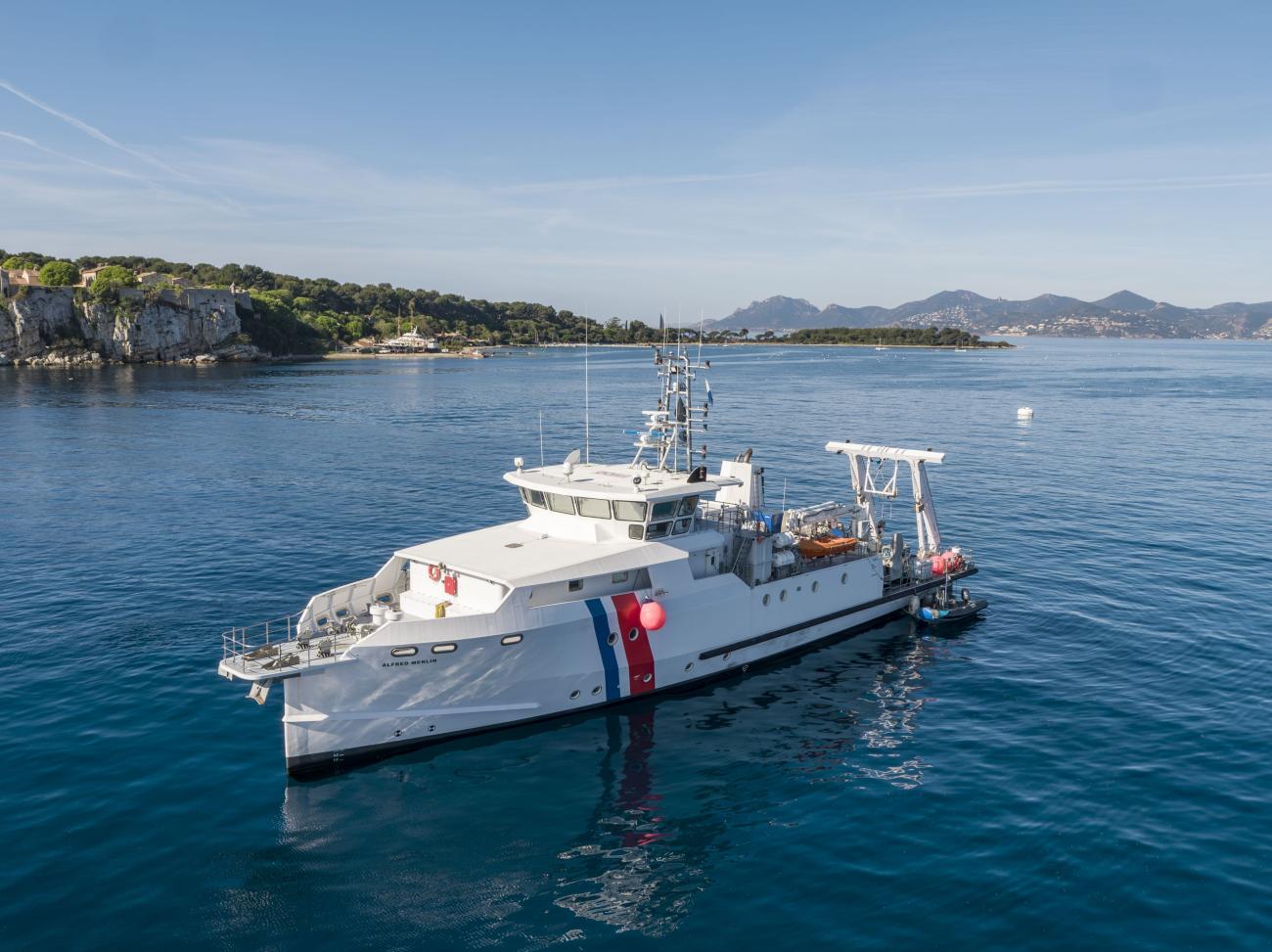
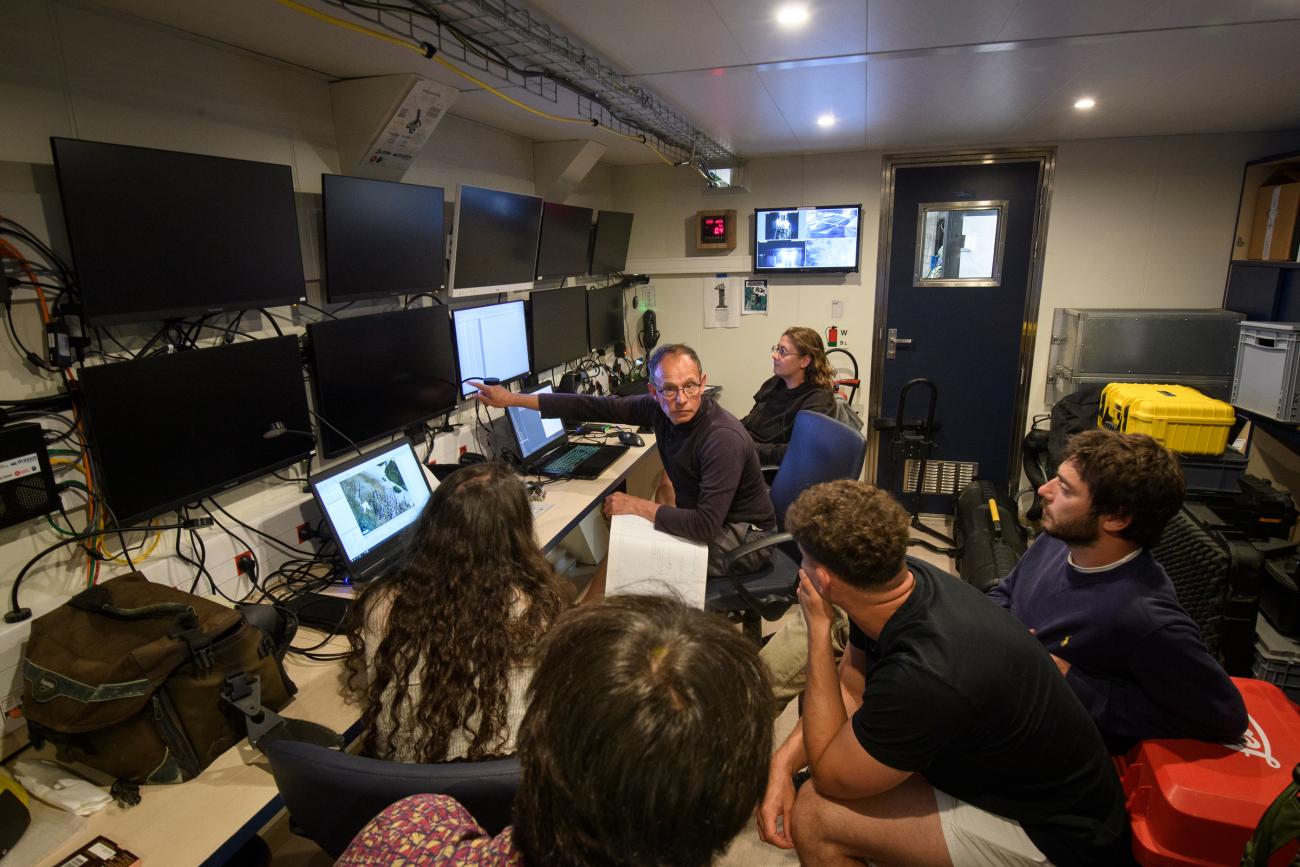
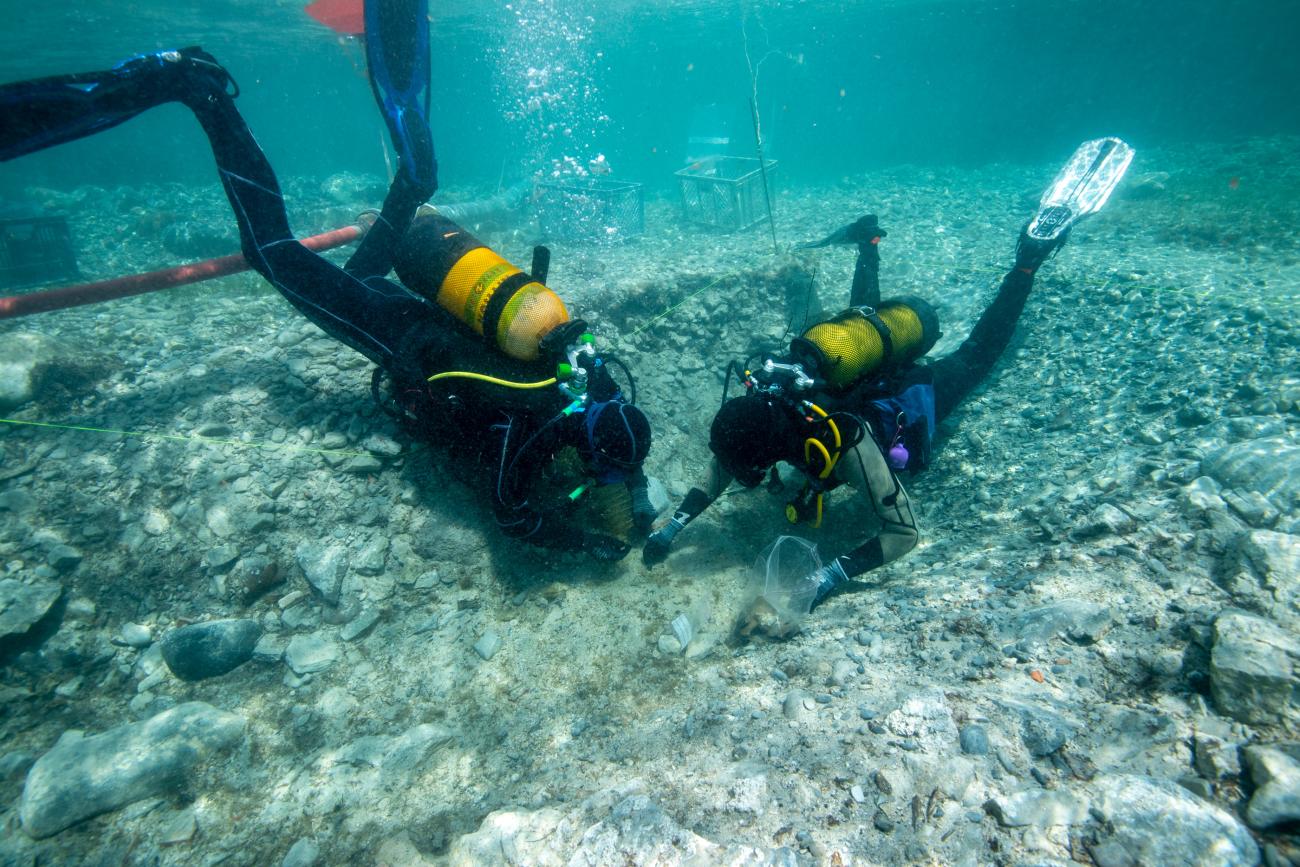
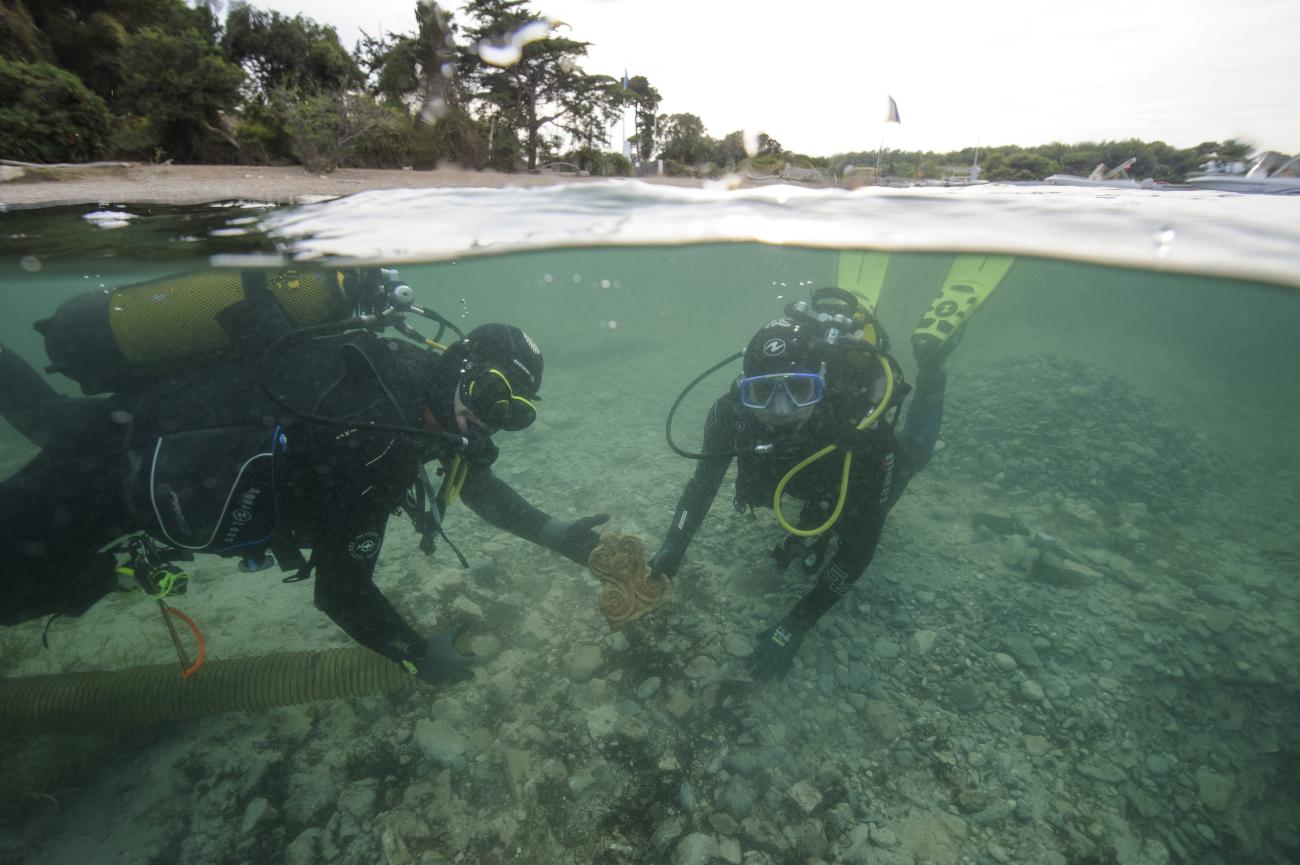
Located in the Lérins archipelago, off the coast of Cannes (Alpes-Maritimes), the island of Sainte-Marguerite is dotted with littoral and underwater remains testifying to coastal occupation during Antiquity. Since 2024, these shallow, near-shore sites have provided an ideal setting for the annual training camp organized by students enrolled in the first year of Aix-Marseille Université's Master's program in maritime and coastal archaeology.
Sainte-Marguerite, a site with archaeological potential
The island of Sainte-Marguerite bears witness to occupation dating back to antiquity, as evidenced by the remains of two villae located at Fort-Royal and Anse du Batéguier, dated to the 2nd-1st centuries BC. These settlements succeed even earlier ones, dating back to at least the IVᵉ century. Evidence of such occupation appears in ancient textual sources, notably in Strabo's Geography (IV, 1, 10).
On the coast, surveys carried out in the 1970s had already revealed submerged coastal remains in Anse Sainte-Anne, to the north of the island. More recent research, carried out by Inrap and Aix Marseille Université, has confirmed the existence of submerged archaeological remains and ancient occupation in the Anse Sainte-Anne and Etang du Batéguier areas.
The current program
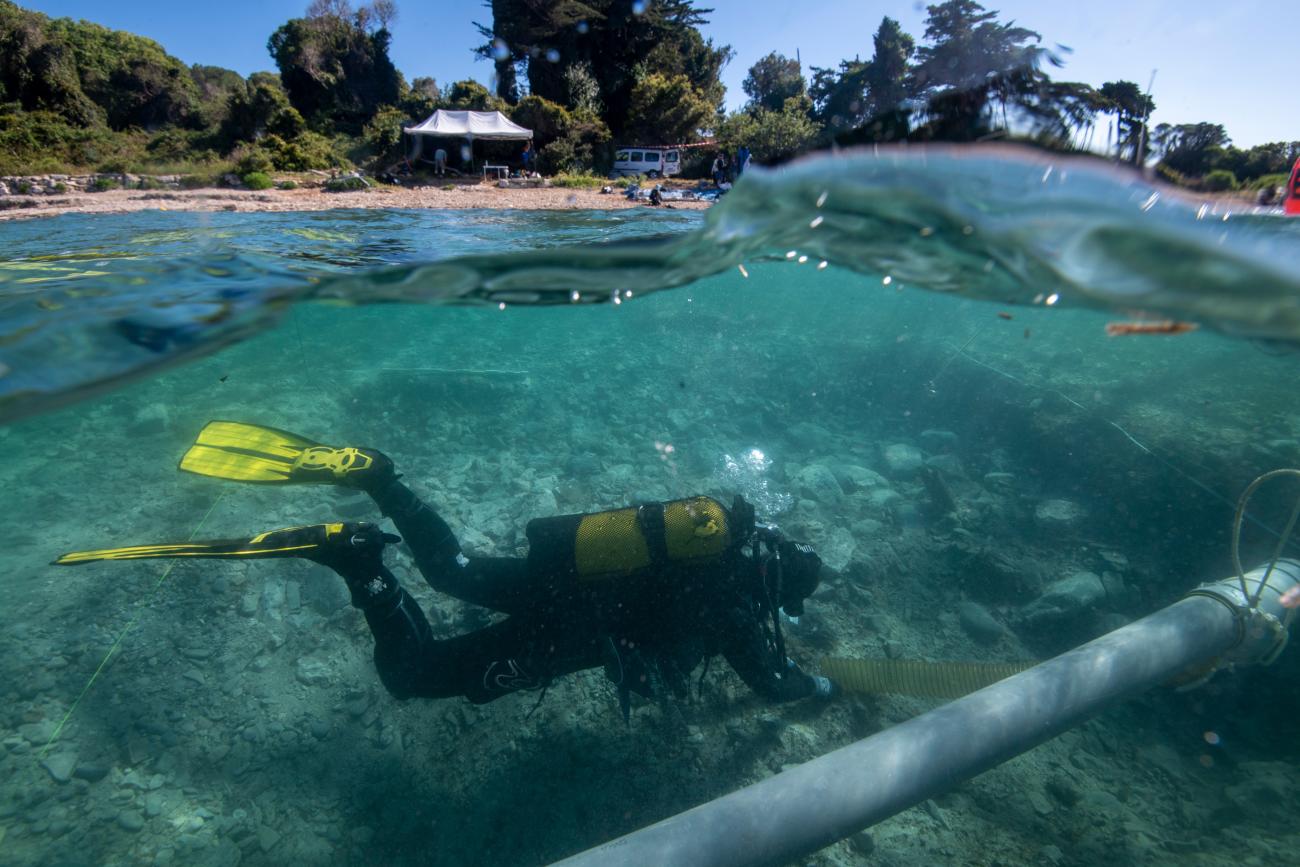
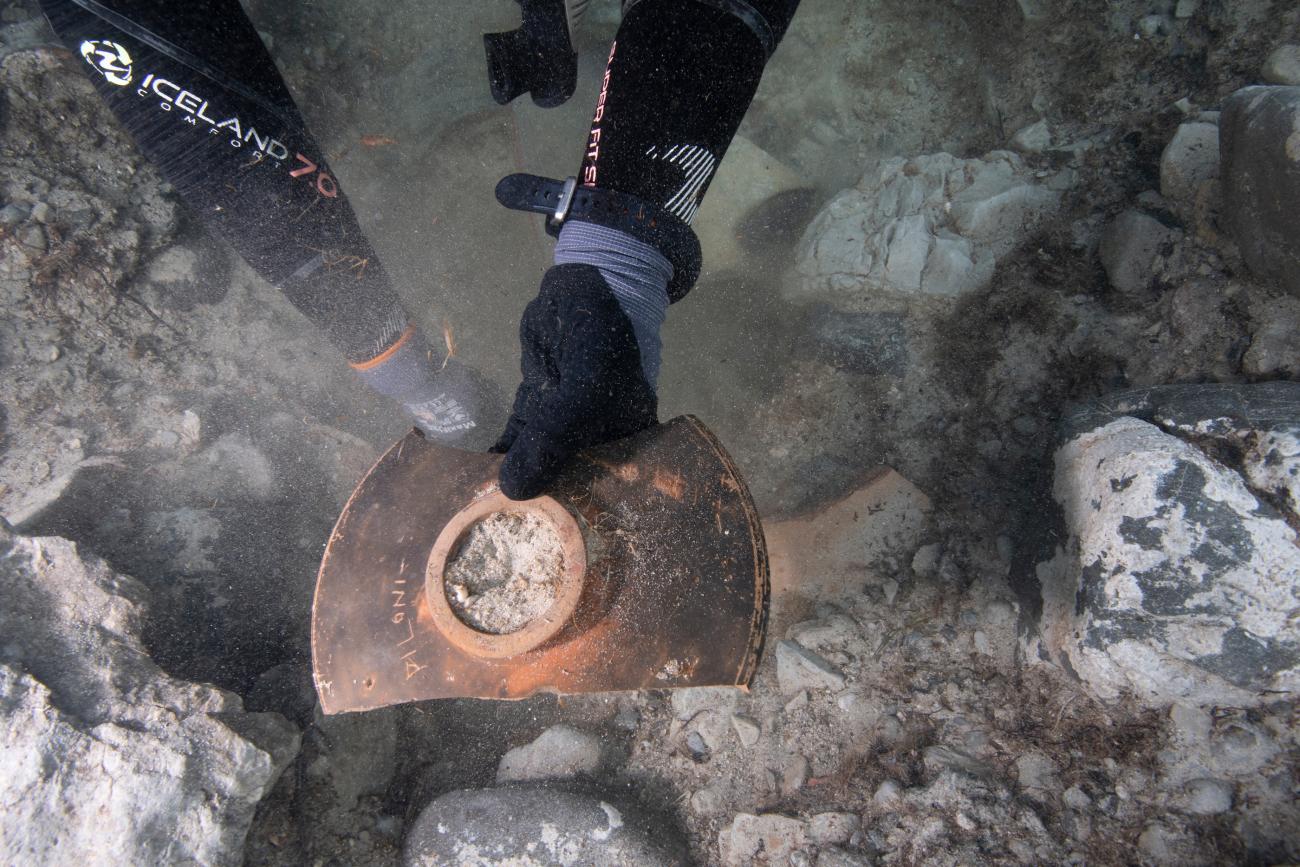
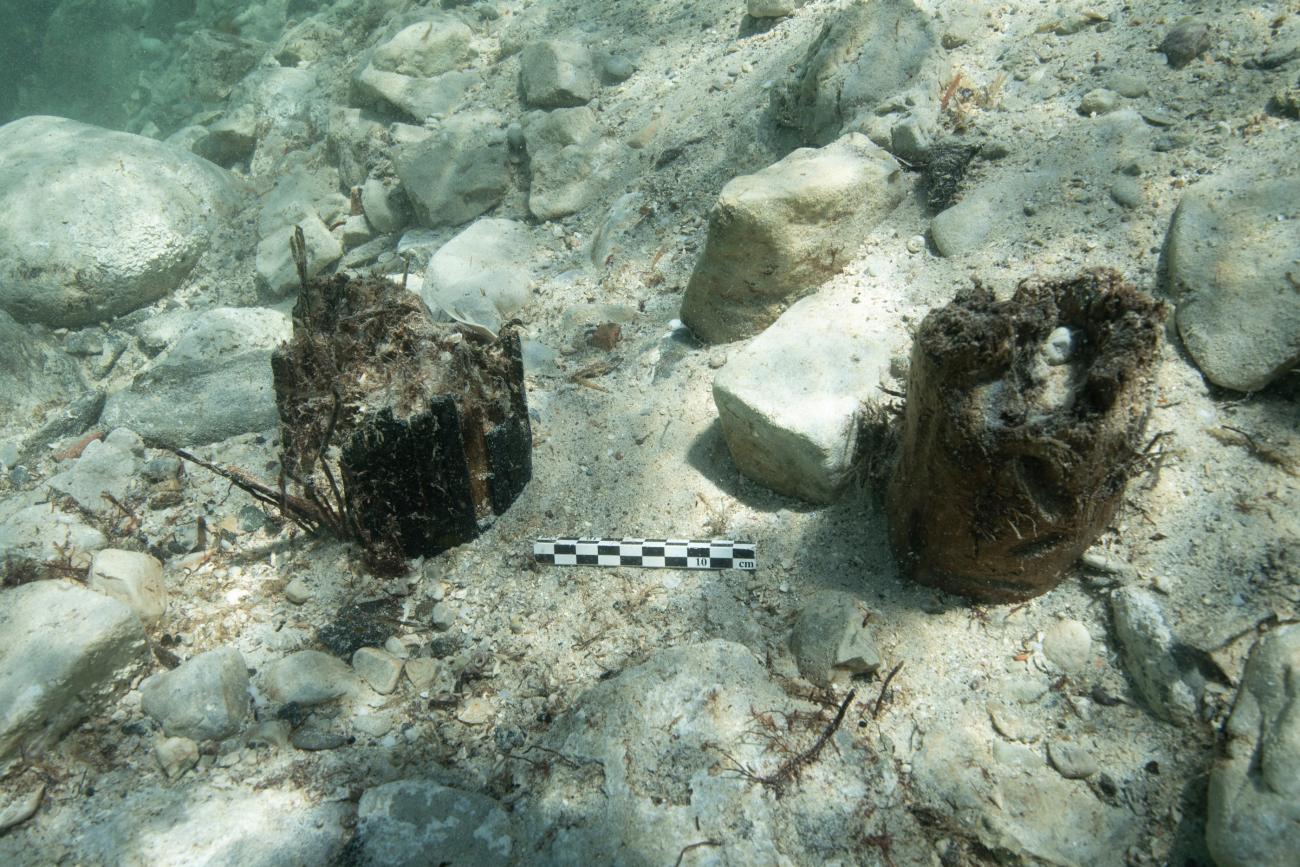
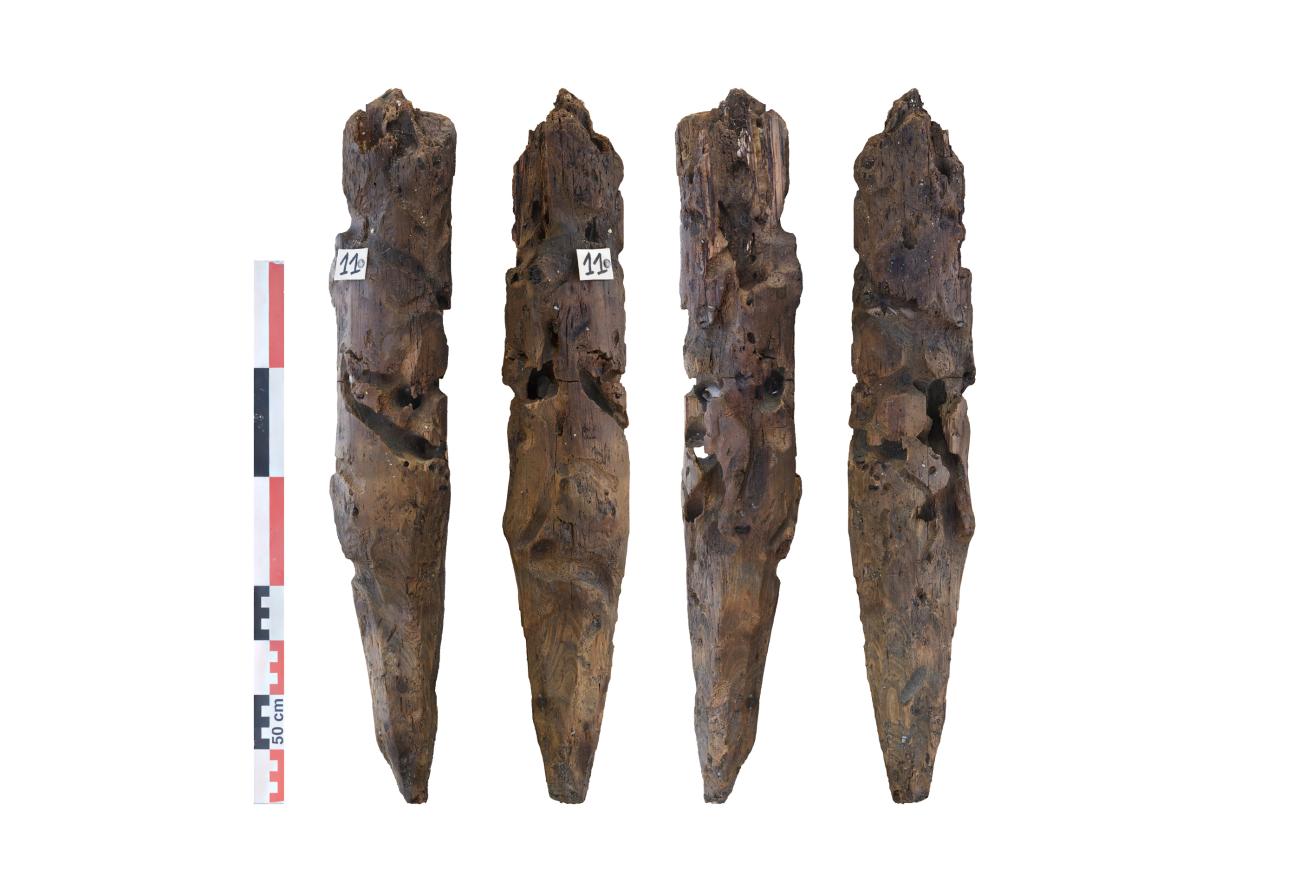
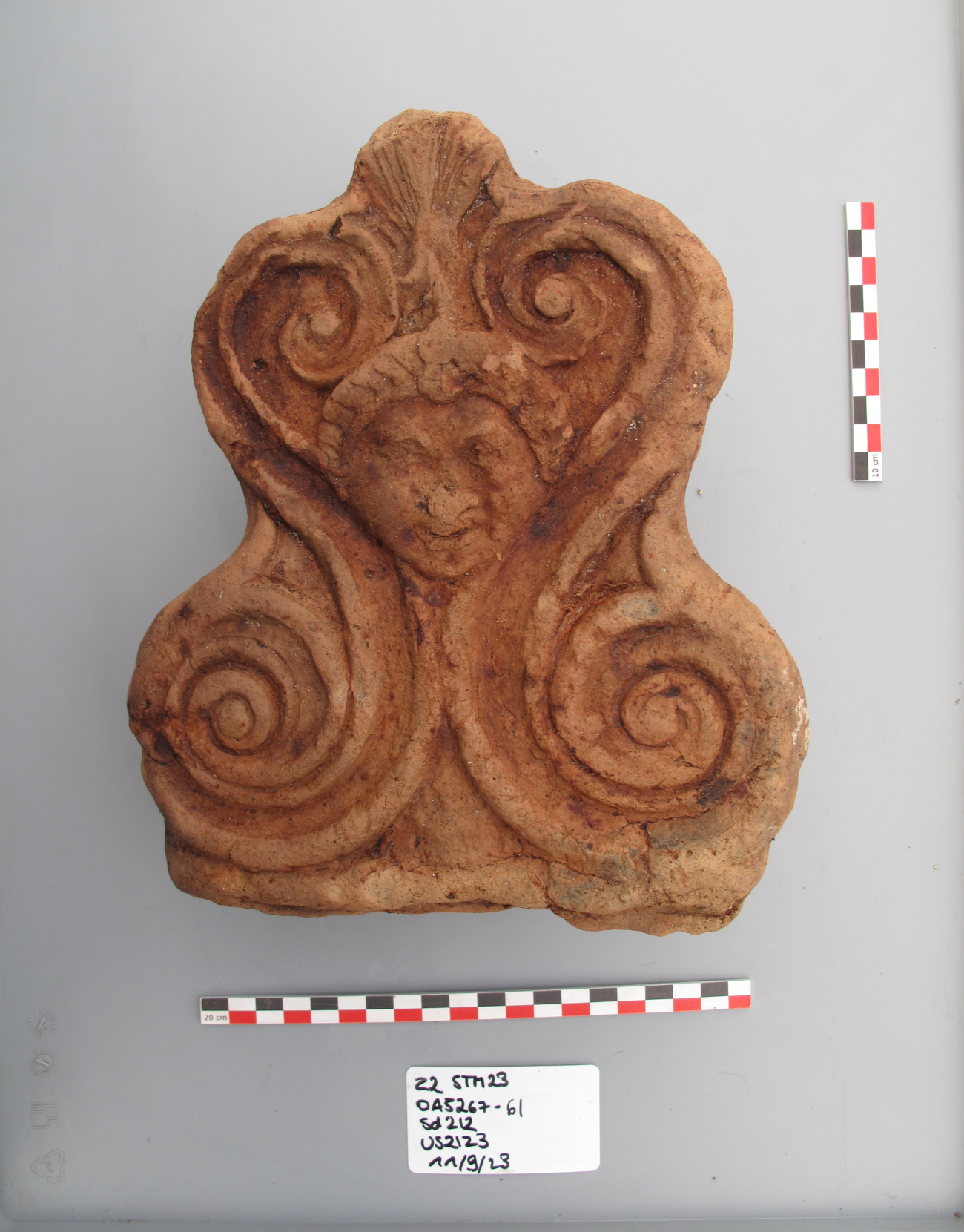
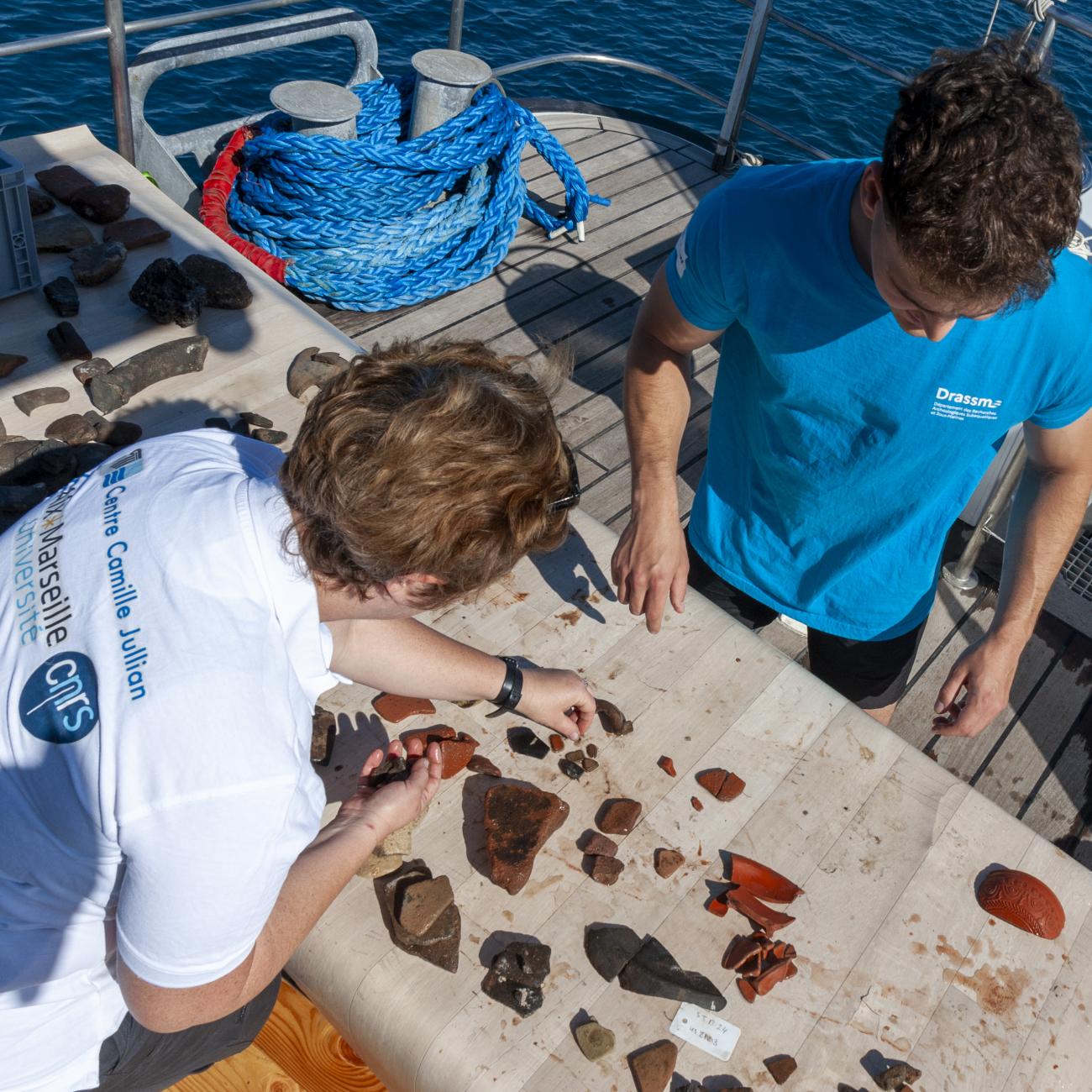
In 2023, a diagnostic survey carried out by Drassm and Aix-Marseille Université aimed to assess the archaeological potential of Anse Sainte-Anne. A shallow visual survey first revealed the presence of scattered ancient and more recent furniture and building elements. Several boreholes then uncovered, beneath the surface sand layer, a significant concentration of ancient ceramic furniture, as well as a series of wooden piles of varying dimensions. Although no built structures were located at this stage, these initial clues suggested a coastal development, potentially a port. Numerous architectural remains (rubble, architectural terracotta, fragments of marble cornice, an antefix) also suggested the presence of buildings on the immediate shoreline.
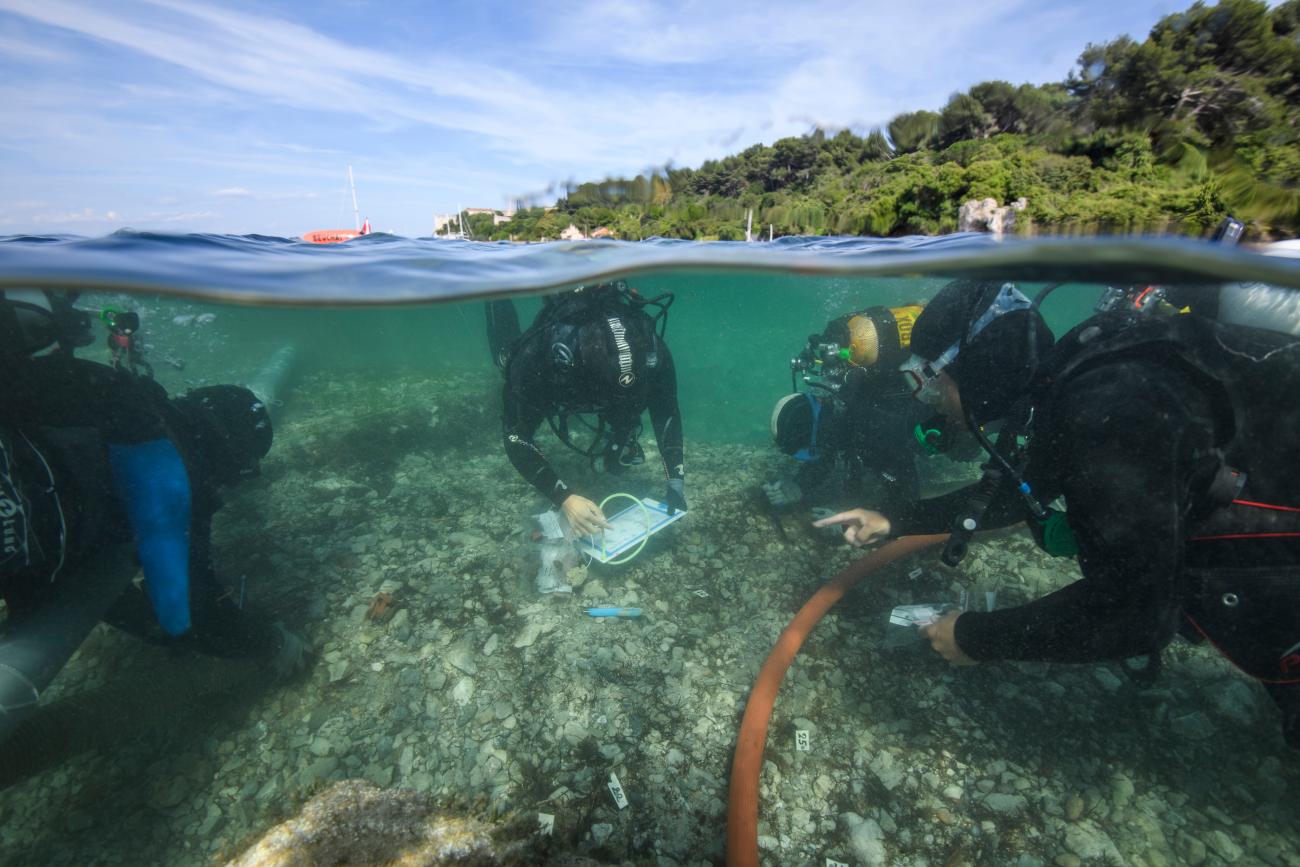
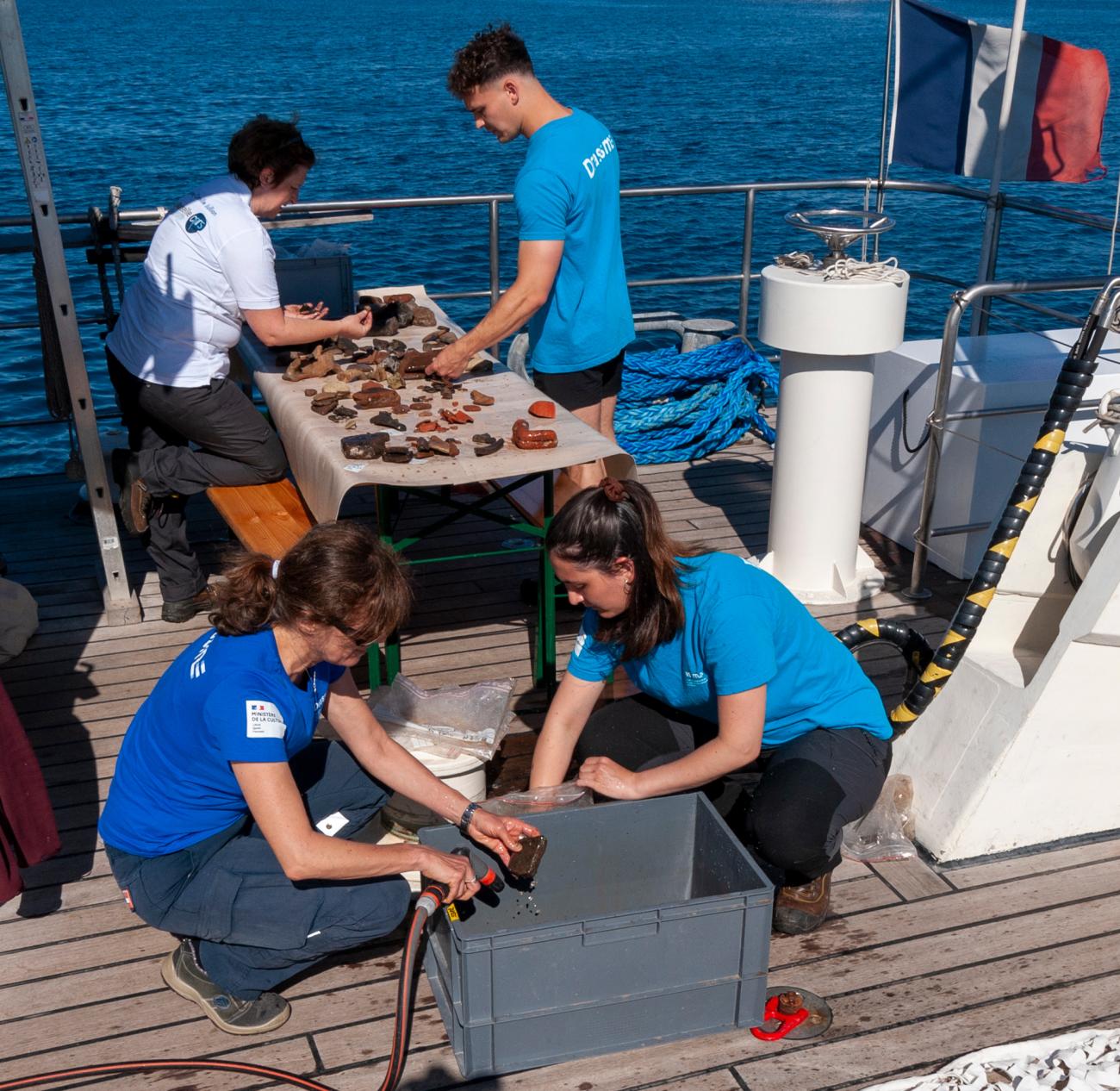
These particularly encouraging initial observations led to the organization, from spring 2024 onwards, of a larger-scale, multi-year operation with a scientific and educational vocation, since it now involves first-year students in the Maritime and Coastal Archaeology Master's program as a training site.
Current activities are aimed at continuing the stratigraphic study of the area by opening new test pits, in order to map the extent of the furniture-rich levels, as well as the numerous wooden piles that the excavation continues to uncover. Investigations are also focusing on the Pointe du Batéguier and the island's south-western coastline, where the nature of the development has yet to be defined, and has been documented by topography and drone aerial photography.
The site is therefore ideal for training in coastal archaeology methods. Future work will need to clarify the chronology of the archaeological assemblages identified, as well as their functions. This will be complemented by a geoarchaeological study of the island as a whole, to provide information on changes in relative sea level, essential for contextualizing the remains.
Scientific managers
- Franca Cibecchini (Ministry of Culture - Drassm - CCJ)
- Anaïs Diméglio (Ministry of Culture - Drassm - CCJ)
Institute laboratory involved
- Center Camille Jullian (CCJ)
Partner institutions and teams
- Département des recherches archéologiques subaquatiques et sous-marines (French Ministry of Culture)
- Société Ipso Facto (Marseille)
- Musée départemental Arles antique
- Archaeological Service of the Nice Côte d'Azur Metropolis